

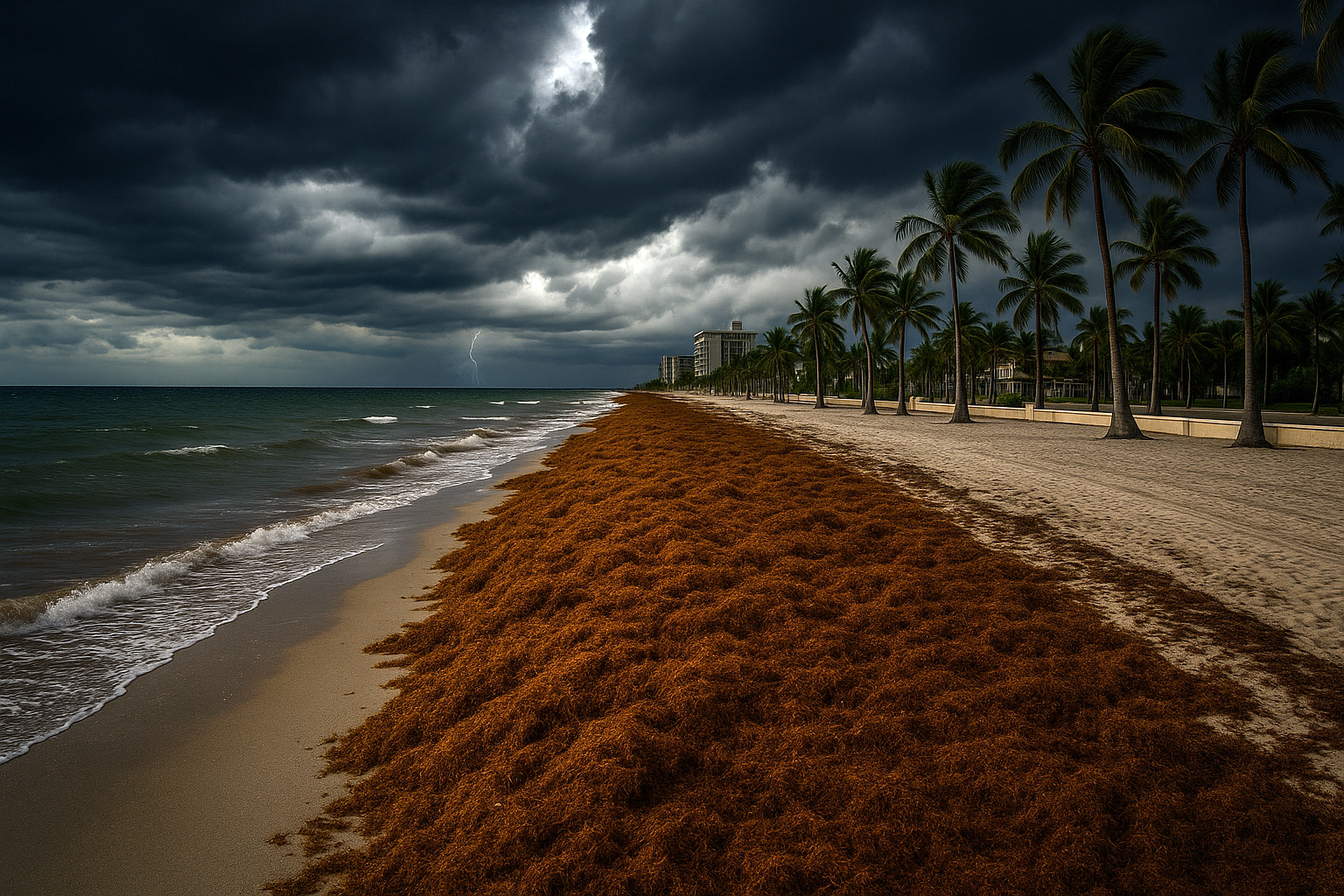
Florida’s Coastlines Choke on a Toxic Tide
There’s a growing menace in the Atlantic — a vast, suffocating belt of brown seaweed stretching more than 5,500 miles. Known as sargassum, this year’s bloom has already shattered previous size records by the millions of tons. And the season’s far from over.
Once a vital part of the open ocean ecosystem, this drifting mass has transformed into a coastal nightmare. When it washes ashore, it smothers beaches, clogs marinas, and chokes the life out of fragile ecosystems from the Caribbean to the Gulf of Mexico — and now, deep into Florida’s waterways.
South Florida is already feeling the squeeze. Miami’s coastlines and marinas are seeing more of this noxious muck, with some areas blanketed in piles of rotting seaweed. The smell is unmistakable — a foul stench of decay and sulfur, the kind that drives tourists away and leaves beach towns scrambling.
What was once a natural marvel has become a recurring environmental disaster. Since 2011, coastal communities have been swamped by increasingly massive blooms. The vibrant postcards of white sand and turquoise water are being replaced by grim images of sludge-covered beaches and bulldozers working overtime just to keep resorts presentable.
In the water, sargassum may serve as a habitat for marine life. But once it hits land and begins to rot, it releases hydrogen sulfide and ammonia — toxic gases that harm both the environment and public health. Skin irritation, respiratory issues, and dead fish baking in the sun are part of the package.
This isn’t just an aesthetic issue — it’s an ecological and economic one. Towns that thrive on tourism are watching their lifeblood get buried under piles of seaweed. Beach crews often work from dawn until dark, battling a tide that never stops. Heavy machinery rakes and hauls the sargassum away, but the process is costly and brings its own environmental scars.
The problem is supercharged by climate change and pollution. Warmer ocean temperatures are fueling the explosive growth of sargassum. At the same time, excess nitrogen pouring into the Atlantic from rivers like the Mississippi and the Amazon is feeding the beast. Much of that nitrogen comes from fertilizer runoff — a byproduct of large-scale agriculture and deforestation, both in the U.S. and deep in South America.
Extreme droughts in the Amazon Basin are making matters worse. With plants dying and drying out, the first heavy rains send waves of nutrient-rich runoff rushing into the sea, acting as fertilizer for the waiting bloom. Once it takes hold, the sargassum spreads fast and wide.
Along Mexico’s Yucatán Peninsula, the problem is so severe that local officials have deployed barriers at sea and even partnered with the Navy to try and intercept the seaweed before it hits shore. These floating barricades act like oil booms, stretching for miles in an attempt to buy time and protect tourism hotspots like Playa del Carmen and Mahahual.
But the damage often comes before the barriers can hold. In the shallows, the seaweed blocks sunlight from reaching corals and seagrasses, killing off vital habitats. Onshore, it decomposes and leaks heavy metals and toxins it’s picked up during its long drift across the Atlantic. These compounds — cadmium, arsenic, and more — leach into the sand and surf, turning once-pristine beaches into polluted swamps.
Marine life doesn’t stand much of a chance. Coastal waters stripped of oxygen by decaying seaweed become dead zones. Crabs, fish, and other creatures either flee or suffocate. The result? Lifeless waters and beaches that stink of death.
And still, the sargassum keeps coming.
There’s talk of turning the tide — literally. Some researchers are exploring ways to repurpose the seaweed. Ideas include turning it into biofuel, using it to make bricks, water purification membranes, or even developing biodegradable plastics to replace the petroleum-based trash choking the oceans. Sargassum absorbs contaminants like a sponge, making it both a hazard and a potential tool in environmental cleanup.
Others suggest sinking it to the ocean floor, locking away the carbon it stores and offering a small reprieve from rising emissions. But those solutions are still in their early stages — far from the scale needed to handle millions of tons of seaweed each year.
This isn’t just a seasonal nuisance anymore — it’s a warning sign. The massive blooms are a red flag for the planet, a symptom of global systems under stress. Warming waters, reckless farming, and a disregard for long-term environmental balance have pushed nature out of alignment.
Until something changes — upstream, in our industries and in our policies — sargassum will keep crashing the party, year after year, choking coastlines and reshaping the shores of the Atlantic.