
Here’s What’s Happening on the North Side of the Inlet (and Why It Matters)
If you fish Broward, dive Broward, surf Broward, or you’re just the kind of South Florida creature that ends up staring at the ocean like it owes you money… you’ve felt it.
That weird, stubborn erosion south of Port Everglades. The sand that should keep sliding down the coast like it always has — but doesn’t. The beach that gets skinnier, steeper, and sketchier after a run of weather. The “where the hell did the shoreline go?” moments that keep showing up like unpaid parking tickets.
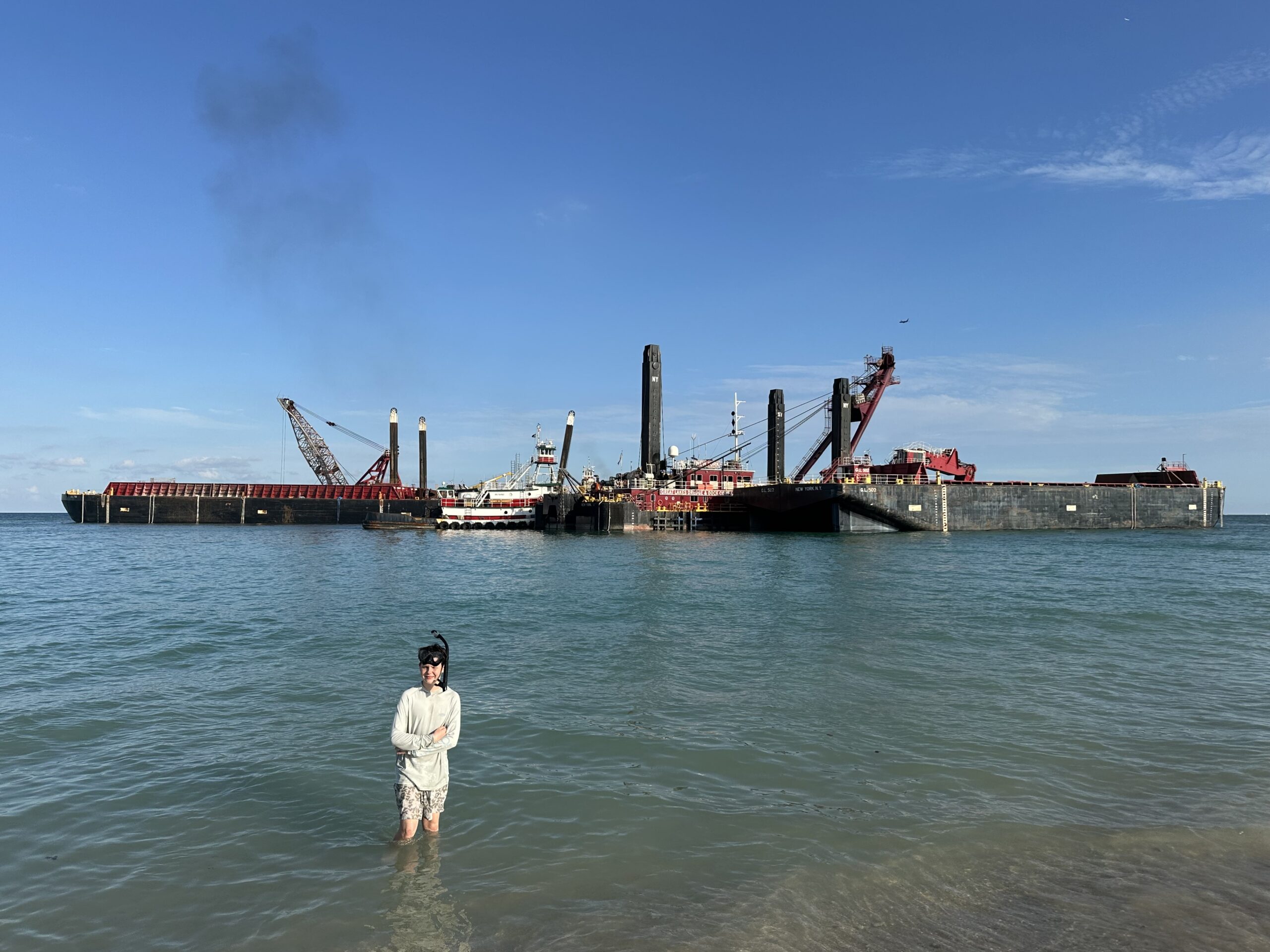
Now Broward County is finally swinging a big, loud, expensive hammer at the problem: the Port Everglades Sand Bypass Project, with dredging on the north side of the inlet, plus upgrades to the north jetty, plus reef mitigation and cleanup work.
But any time you put dredges, pipes, and stirred-up bottom in the same sentence as “nearshore,” the ocean starts asking questions. And so should we — especially in a place where reefs, turtles, manatees, hardbottom, and fisheries are already fighting for oxygen in a state that loves pouring concrete like it’s a hobby.
So here’s the TideBandits breakdown: what the north-side dredging project is, why it’s happening, and the environmental effects people are worried about — from legit near-term turbidity impacts to the bigger “are we repeating PortMiami?” anxiety that’s blowing up again around federal dredging plans in the same neighborhood.
What’s the dredging project on the north side of the inlet?
This north-side work is part of the Port Everglades Sand Bypass Project — a long-planned attempt to “fix” how the inlet and jetties interrupt the natural north-to-south sand flow along Broward beaches.
The idea is simple (and kind of brilliant):
Build a sand trap on the north side of the inlet where sand naturally piles up.
Dredge/harvest that trapped sand and move it to the beaches south of the inlet that are starving for it.
Repeat that harvesting cycle over time (the County has described harvesting about every 4 years).
Broward’s public materials describe it as a resilience strategy with beach-renourishment and storm-protection benefits — including protecting infrastructure and property south of the inlet.
Project phases (important because “dredging” isn’t the only moving part):
Dredging
North jetty enhancement
Artificial reef mitigation
Rubble clearing
Broward County says the dredging work was awarded to Great Lakes Dredge & Dock, and the overall project completion is estimated by the end of 2027.
Why do this at all?
Because inlets don’t just let boats in and out — they also mess with sediment budgets.
South Florida’s beaches are basically a conveyor belt. Sand drifts down the coast. Add a big engineered inlet with jetties, and you’ve built a sand traffic jam: sand piles where it can pile, and beaches down-drift get robbed.
Broward frames the Sand Bypass as a way to:
reduce inlet-driven impacts to south beaches,
create a reliable local sand source,
and reduce reliance on trucking sand from inland sources as offshore borrow sites become less available.
On paper, that’s a win: healthier beaches can mean better nesting habitat, better storm buffering, better public access, and fewer emergency renourishment scrambles after every bad season.
But “win” depends on how it’s executed.
The environmental effects people worry about (and why)
1) Turbidity plumes: the underwater “smoke”
Dredging stirs up fine sediments. Those sediments can form turbidity plumes — clouds that reduce light penetration and can settle out on nearby habitats.
Why it matters:
Corals and hardbottom don’t love getting dusted.
Seagrass doesn’t love getting shaded.
Filter feeders don’t love eating a sand smoothie.
Even the Port’s own materials (for separate harbor improvement work) acknowledge concerns about turbidity and sedimentation impacts to corals as a known risk factor during dredging.
For nearshore anglers and divers, this is the most immediate, most visible impact: “Why does the water look like café con leche for two weeks straight?”
2) Smothering / burial of bottom habitat
A plume isn’t just ugly — it can settle. That’s where “smothering” becomes the scary word.
If sediments settle onto:
hardbottom
worm rock
nearshore reef structure
patchy live-bottom communities
…you can get mortality in organisms that can’t just crawl away, plus changes in the micro-habitat that juvenile fish and invertebrates depend on.
This is also why mitigation plans often include reef work — because even when you do everything “right,” dredging near sensitive bottom is a contact sport.
3) Noise, vessel traffic, and wildlife interaction risk
Dredges, tugs, and support boats add:
noise,
lighting,
traffic patterns,
and collision risk.
Port Everglades sits in a natural environment that includes manatees, fish, corals, mangroves, seagrasses, etc., and the Port has described dredging-related work in this area as unusually scrutinized for environmental sensitivity.
Manatees and turtles don’t read Notice to Mariners. They just show up.
4) Water quality and “secondary” effects (the stuff that sneaks up later)
Sediment disturbance can also mobilize nutrients or legacy contaminants depending on what’s in the bottom material (this varies by location and sediment type). Even when contamination isn’t the headline issue, the general concern is that disturbed sediments can worsen:
localized water clarity,
localized oxygen dynamics,
and stress on already-stressed organisms.
In South Florida, where summer water temps already push reefs into survival mode, “extra stress” is not a small thing.
The big shadow in the room: coral reef impacts and the federal dredging fight
Now here’s where things get messy — and where people start mixing two different conversations:
The Sand Bypass Project (north-side sand trap / bypassing)
The proposed federal Port Everglades Navigation Improvements Project (deepening/widening shipping channels, a major USACE initiative)
They’re not the same project, but they live in the same neighborhood, and the community concern is cumulative: How much bottom disturbance can this coastline take before something snaps?
Recent reporting has highlighted scientific concern that corals near Port Everglades could face unprecedented impacts from the federal deepening/widening plan — including discussion of large coral numbers near the channel and warnings about direct and indirect impacts from turbidity and sedimentation.
Opinion outlets and advocacy coverage go even harder, describing scenarios involving extensive dredging footprint, blasting, and the risk of burying coral habitat — and pointing to PortMiami as a cautionary tale.
Whether you agree with the most aggressive framing or not, the underlying issue is real: this region’s reefs are already under pressure (heat stress, disease, water quality, physical impacts), and dredging can be a force multiplier.
What mitigation is being discussed?
On the “we’re trying to do this responsibly” side, Port Everglades highlights mitigation measures tied to federal planning, including:
transplanting ~103,000 nursery-propagated corals to existing reefs and new artificial reefs,
relocating corals within the footprint,
restoring seagrass and mangroves (West Lake Park is mentioned),
and other channel/bulkhead approaches intended to reduce impacts.
Separately, Broward’s Sand Bypass page includes artificial reef mitigation as a core project phase.
Mitigation matters — but here’s the TideBandits truth: mitigation is a seatbelt, not a forcefield. It reduces harm; it doesn’t erase it. And its success depends on monitoring, enforcement, and whether contractors are actually held to performance standards when conditions go sideways.
What should locals watch for during this north-side dredging work?
If you’re a fisherman, diver, surfer, or beach rat living near the inlet, here are the practical “eyes on the water” indicators:
Persistent turbidity on otherwise calm days (not storm-driven)
Sediment settling on nearshore structure after active work periods
Wildlife interactions (manatees/turtles in the work zone)
Changes in bait presence tight to the inlet (turbidity can shift bait and predator behavior)
Beach response south of the inlet over time (the project’s whole purpose is restoring sand supply)
And if you care about accountability: track what the project promised (phases, reef mitigation, rubble clearing) versus what actually happens in the water.
TideBandits final take
The north-side dredging at Port Everglades is being sold as a long-overdue fix: trap sand where it’s already piling up, move it where the coast is bleeding out, and stop treating beach erosion like a surprise every time a front rolls through.
That’s a reasonable goal.
But the ocean doesn’t do “reasonable” on command. Dredging is disruptive by definition — and in a county where reefs and nearshore ecosystems are already thin-skinned from heat, disease, and development pressure, the margin for error is microscopic.
So yeah — the sand bypass could help beaches and storm resilience. And yeah — the dredging could also create turbidity plumes, stress nearby habitat, and add another layer of risk to an already stressed coastal ecosystem.
The only way this doesn’t turn into another South Florida “we meant well” story is if the work is done with real safeguards, real monitoring, and real consequences when the water goes sideways.
Because the inlet doesn’t belong to the port.
It doesn’t belong to the county.
It belongs to the ocean.
And the ocean keeps receipts.