

How the Silver King May Have Found Its Way Into One of the Greatest Paintings in History
For most anglers, a tarpon is more than just another fish. It’s the fish. The Silver King has an almost mythical reputation, inspiring generations of fishermen to chase explosive jumps, blistering runs, and unforgettable moments that become stories for the rest of their lives. Artists have tried to capture that magic for centuries. Walk through any tackle shop or coastal lodge and you’ll find paintings of giant tarpon erupting from emerald water, chrome scales reflecting the sun as they throw spray in every direction. Yet the most famous painting of a tarpon may not hang in a fishing lodge or a museum dedicated to wildlife art. It may be staring down at millions of visitors from the ceiling of the Sistine Chapel in Vatican City.
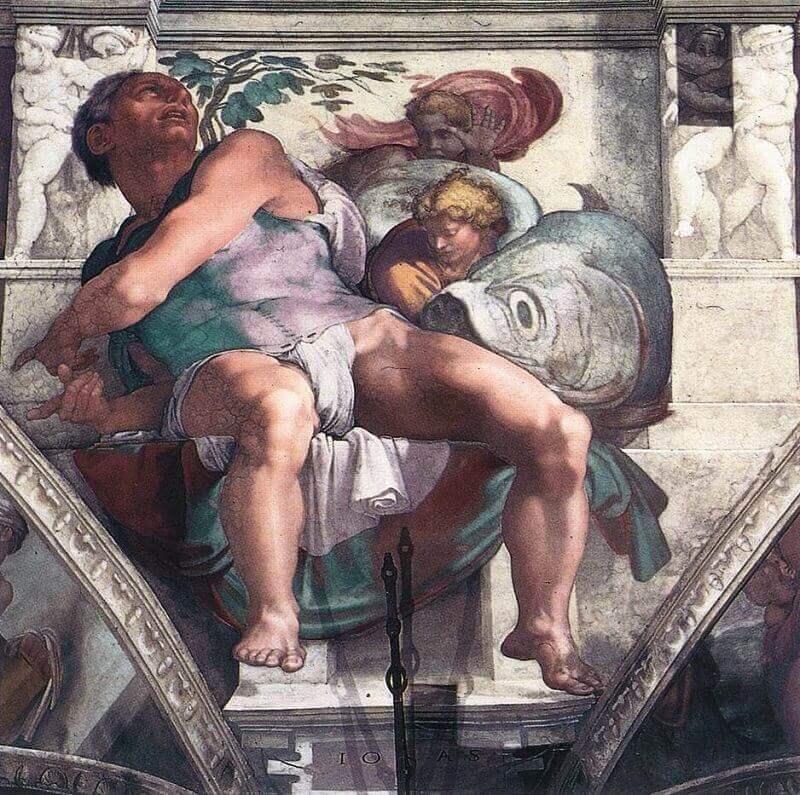
The first time you walk into the Sistine Chapel, it’s impossible not to feel overwhelmed. The room itself is almost beyond description. Every square inch is covered in some of the greatest artwork ever created, and your eyes instinctively dart from one masterpiece to another. Most visitors immediately search for Michelangelo’s famous Creation of Adam, but anglers have a habit of noticing things that other people miss. Hidden among the biblical scenes is Michelangelo’s depiction of Jonah and the Great Fish. At first glance it appears to be just another religious painting, but the longer you study the creature beside Jonah, the more familiar it becomes. The large eye, the heavy upward-facing jaw, the broad silver body, and even the shape of its fins all bear a striking resemblance to one of the most recognizable fish in the ocean—the Atlantic tarpon. Standing beneath that ceiling, it’s hard not to ask yourself a question that has fascinated both anglers and historians for years: How did Michelangelo know what a tarpon looked like more than 500 years ago?
Between 1508 and 1512, Michelangelo spent four extraordinary years painting the ceiling of the Sistine Chapel after being commissioned by Pope Julius II. The work would become one of the defining artistic achievements in human history, but hidden within those incredible frescoes lies one of fishing’s greatest mysteries. Modern retellings of the biblical story often refer to Jonah and the whale, but the earliest translations never mention a whale at all. Instead, they describe Jonah being swallowed by a “great fish.” That seemingly minor detail opens the door to an entirely different interpretation. If Michelangelo wasn’t trying to paint a whale, then what fish was he trying to depict? To many anglers, the answer appears surprisingly obvious.
The resemblance to a tarpon is difficult to ignore, yet there is one major problem with that theory. Tarpon don’t belong in Italy. Today, Atlantic tarpon exist in two major populations. The fish most fishermen are familiar with inhabit the western Atlantic, ranging from the Carolinas through Florida, the Gulf of Mexico, the Caribbean, Central America, and all the way to Brazil. A second population lives thousands of miles away along the western coast of Africa, stretching from Senegal south toward the Congo. Historical records show virtually no evidence that tarpon were ever native to the Mediterranean Sea, making it highly unlikely that Michelangelo simply wandered down to a local fish market and found one lying on the dock. While a stray tarpon was reportedly caught off Portugal decades ago, isolated occurrences are hardly enough to explain such an accurate depiction by an artist who never traveled beyond Europe.
So where did the inspiration come from? The most convincing explanation begins not in Italy, but along the wild Atlantic coastline of Africa. During the late 1400s and early 1500s, Portuguese explorers were pushing farther south than ever before, opening new trade routes and returning to Europe with stories of lands, wildlife, and cultures that most people could scarcely imagine. These expeditions didn’t just bring back spices, ivory, and gold. They also brought back incredible tales of the natural world. It’s easy to imagine weathered sailors returning to port describing enormous silver fish that exploded from the water and grew larger than any fish they’d ever encountered before. Fishermen have never been known for telling small stories, and a two-hundred-pound tarpon launching itself skyward would have sounded almost mythical to Renaissance Europe.
Fishing historian Norman Duncan has long supported a similar theory, suggesting that explorers and commercial fishermen traveling along Africa’s west coast may have encountered Eastern Atlantic tarpon and carried those stories—or perhaps even preserved specimens—back to Italy. Artists during the Renaissance constantly studied unusual animals brought home by explorers. Lions, elephants, rhinoceroses, and countless exotic birds all appeared in European artwork despite the artists never seeing them in the wild. If Michelangelo had access to detailed sketches, descriptions, or even the preserved body of a tarpon, accurately painting one becomes far less mysterious than it first appears. Instead of imagining the fish from scripture, he may have simply used the most impressive “great fish” anyone in Europe had ever seen.
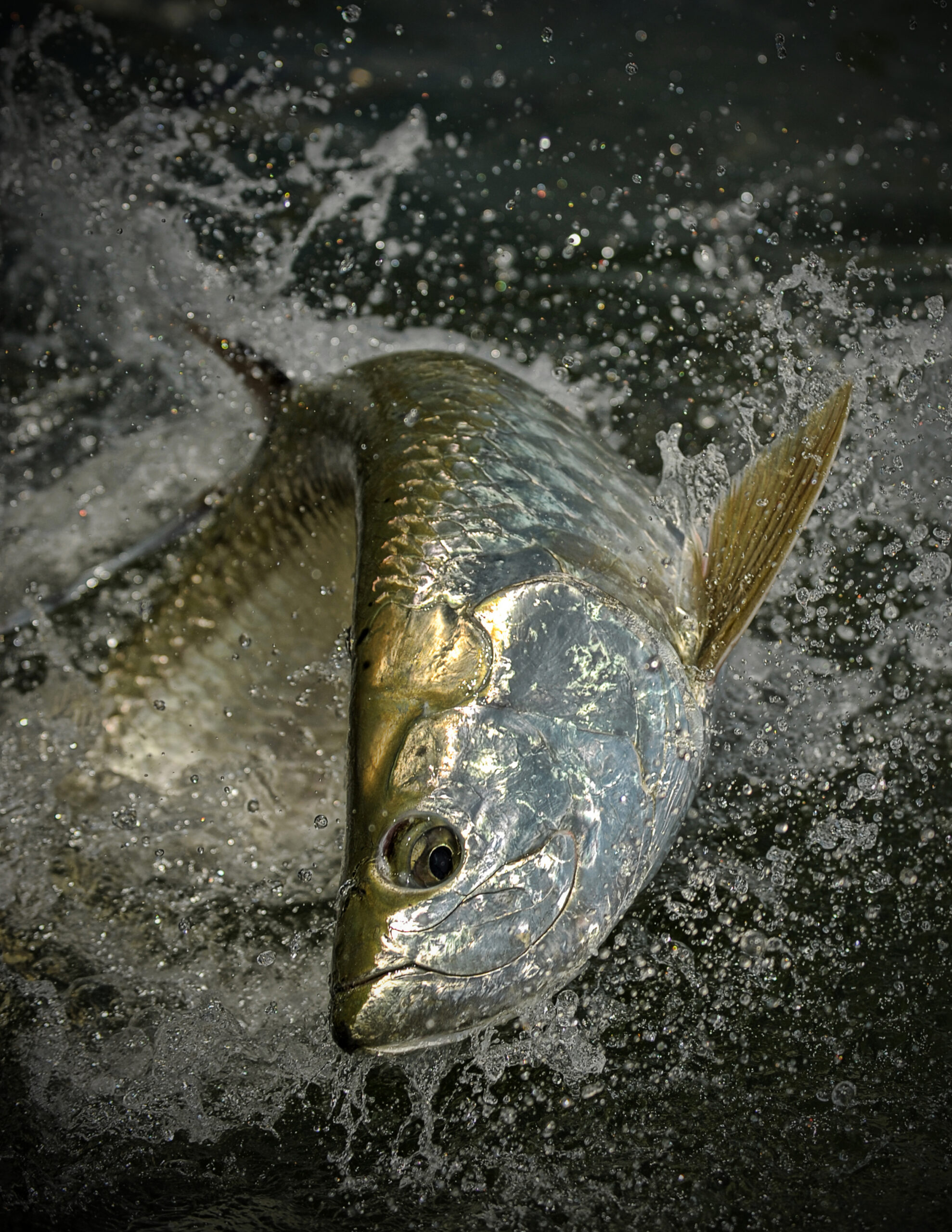
What makes that theory even more compelling is that western Africa remains one of the greatest destinations on Earth for giant tarpon. In 2003, Guinea-Bissau produced the current IGFA all-tackle world record Atlantic tarpon, an astonishing fish weighing 286 pounds. That’s roughly forty pounds heavier than the largest officially recorded tarpon landed in the United States. Even today, serious anglers travel halfway around the world hoping to encounter fish of that caliber. Imagine what those waters must have looked like five centuries ago, long before commercial pressure, modern development, or recreational fishing. Explorers almost certainly encountered schools of fish that would have seemed impossible to anyone back in Europe, and those stories undoubtedly spread through ports, markets, and royal courts. It isn’t difficult to believe that one of history’s greatest artists eventually heard those stories himself.
Whether Michelangelo intentionally painted a tarpon or simply created a fish that happened to resemble one may never be answered with complete certainty. That’s part of what makes the mystery so fascinating. Every angler has experienced that moment when a fish leaves just enough evidence behind to fuel endless debate. Was it really that big? Did it actually jump that high? Was it the fish of a lifetime? Fishing has always lived somewhere between fact and folklore, and perhaps that’s exactly where the Sistine Chapel tarpon belongs. It’s a mystery that refuses to die because every generation of anglers sees the same thing when they look at Michelangelo’s masterpiece.
Walking back out into the streets of Rome, surrounded by ancient architecture and thousands of years of history, it’s impossible not to think about how fishing has always connected people across cultures and centuries. Long before carbon-fiber rods, braided line, and center consoles, people were captivated by extraordinary fish. The Silver King has inspired artists, explorers, storytellers, and fishermen for hundreds of years, and perhaps one of its earliest appearances has been hiding in plain sight above millions of visitors’ heads all along. Most people visit the Sistine Chapel searching for Michelangelo’s genius. Anglers leave wondering whether they just found one of the oldest paintings of a tarpon ever created.
Maybe we’ll never know the definitive answer. Maybe Michelangelo never intended to paint a tarpon at all. But if you’ve ever watched a hundred-pound Silver King explode from the water beneath a sunrise sky, you’ll understand why so many fishermen believe that’s exactly what they’re looking at. Some fish are simply too magnificent to remain confined to the ocean. They find their way into stories, legends, paintings—and perhaps even onto the ceiling of one of the greatest works of art the world has ever known.