
Tagging Sawfish in Stuart, Florida
Florida’s Treasure Coast doesn’t just sparkle with million-dollar yachts and endless lines of tarpon—it hides prehistoric monsters that most anglers will never see. Stuart, Florida—the Sailfish Capital of the World—is also home to one of the rarest and most misunderstood predators swimming our waters: the smalltooth sawfish. With its chainsaw-like rostrum, armored body, and ghostlike presence, this is a creature out of another era, a living relic that hasn’t changed much in millions of years. And right now, in these waters, the fight to keep them alive isn’t just science—it’s war.
That’s where the Florida Fish and Wildlife Conservation Commission (FWC), TV show host Carter Andrews, and local legend Captain Chris Britton come in. Together, they’re hitting the water with one mission: tag, study, and protect these apex fish before it’s too late.
Hunting for prehistoric Ghosts
Sawfish aren’t something you stumble upon. You don’t just go out and “catch one.” They are rare, federally endangered, and cloaked in mystery. To even find one is a battle of patience, knowledge, and sheer grit.
On this day in Stuart, the sun was a hammer overhead, the tide pushing across shallow sandbars where bait scattered like broken glass. Carter Andrews, a man who’s wrestled with giant trevally in the South Pacific and marlin in Costa Rica, leaned against the rail like a coiled spring. Beside him, Captain Chris Britton—one of Stuart’s sharpest captains—kept his eyes locked on the water’s texture, looking for that faint shimmer, that telltale wake that meant a sawfish was sliding through.
Then it happened. A shadow cut across the water like a submarine, slow and deliberate, water pushing off its saw as it cruised. “There she is,” Britton muttered, as the team moved into action.
The Tagging Fight

Catching a sawfish isn’t about sport—it’s about science. The FWC has a tight playbook: use specialized heavy tackle to hook the animal safely, keep it close to the boat, and then the real work begins.
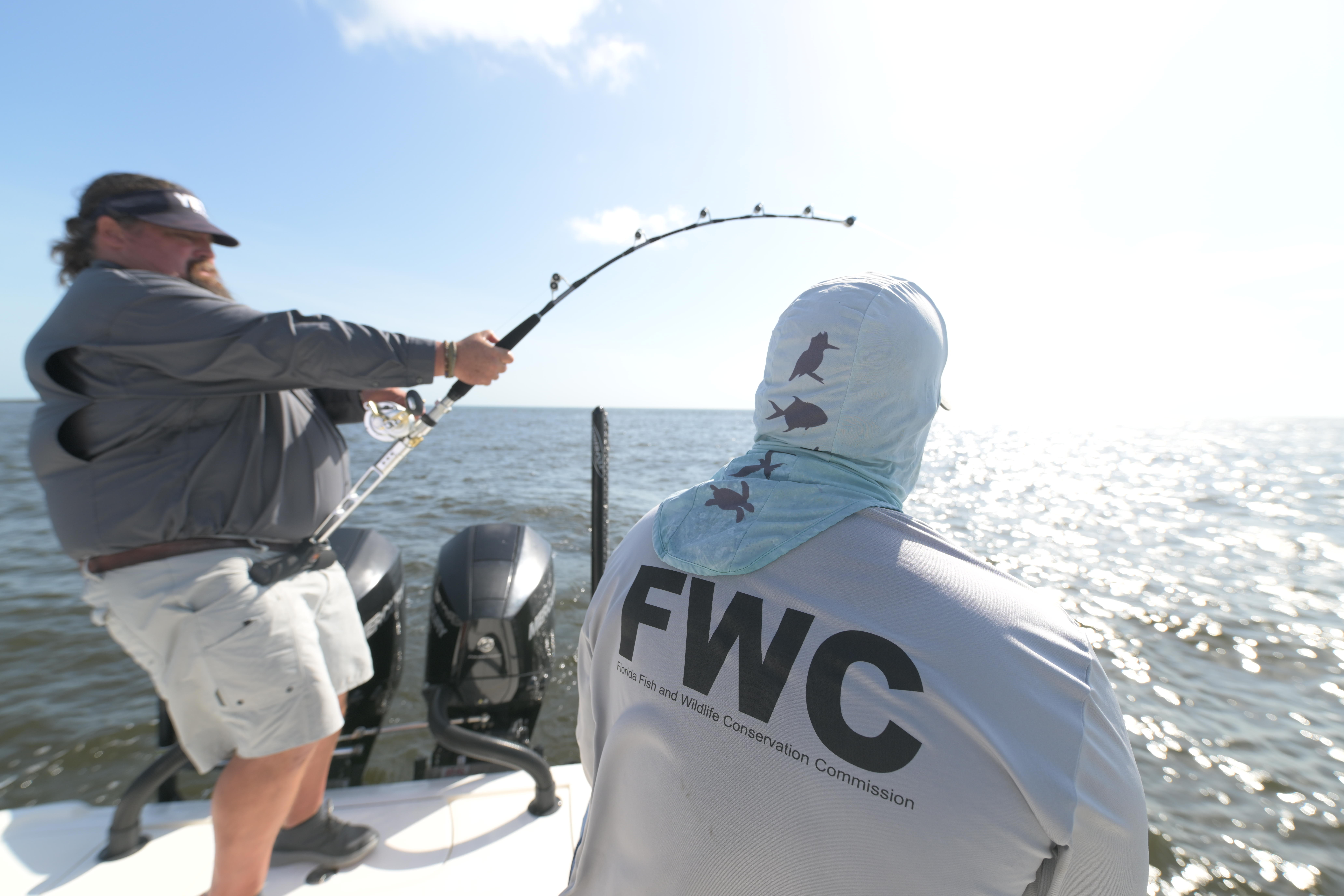
The fight was brutal but controlled. Sawfish don’t run like a sailfish or greyhound like a tuna—they bulldog. They use that saw to thrash, sending shockwaves through the rod, testing every knot, every ounce of drag. Carter dug in, sweat dripping, face tight with that familiar mix of adrenaline and respect. Minutes stretched into eternity until finally, the sawfish settled just off the bow, a prehistoric slab of power.
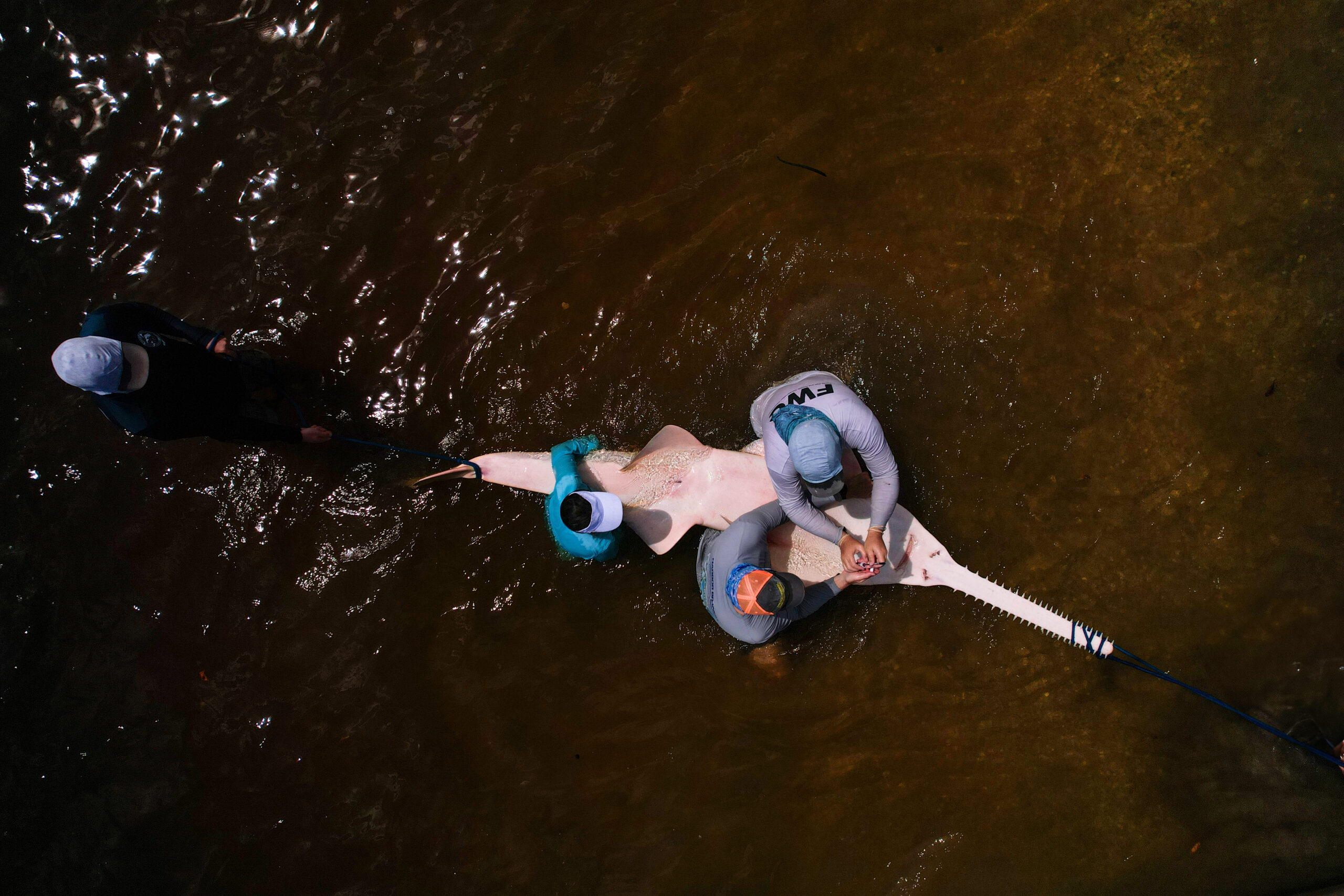

The team snapped into motion. A rope was looped carefully around the rostrum to keep the fish steady. Scientists from FWC moved in with precision—measuring, scanning, taking samples. Most important: implanting a satellite tag that would beam back data on the fish’s movements, habitat use, and survival.
This isn’t catch-and-release. This is catch-and-conserve. Every tag tells a story, and every story adds up to the bigger fight for the sawfish’s future.
Why Sawfish Matter
It’s easy to dismiss sawfish as freaks of nature, but they’re vital to the health of Florida’s ecosystems. Once common from Texas to the Carolinas, sawfish populations have collapsed due to overfishing, habitat loss, and accidental bycatch in commercial nets. Today, their stronghold is here—South Florida’s estuaries and mangroves.
Sawfish are apex predators, keeping the balance in check. Without them, the system unravels—prey species explode, seagrass beds suffer, and the ripple effect runs straight up the food chain. Protecting sawfish isn’t just about saving one species. It’s about keeping Florida’s waters wild, balanced, and alive.
Carter put it bluntly: “When you’re eye-to-eye with something this rare, this ancient, you realize what’s at stake. We lose sawfish, and we lose a piece of history we can never get back.”
Conservation on the Front Lines
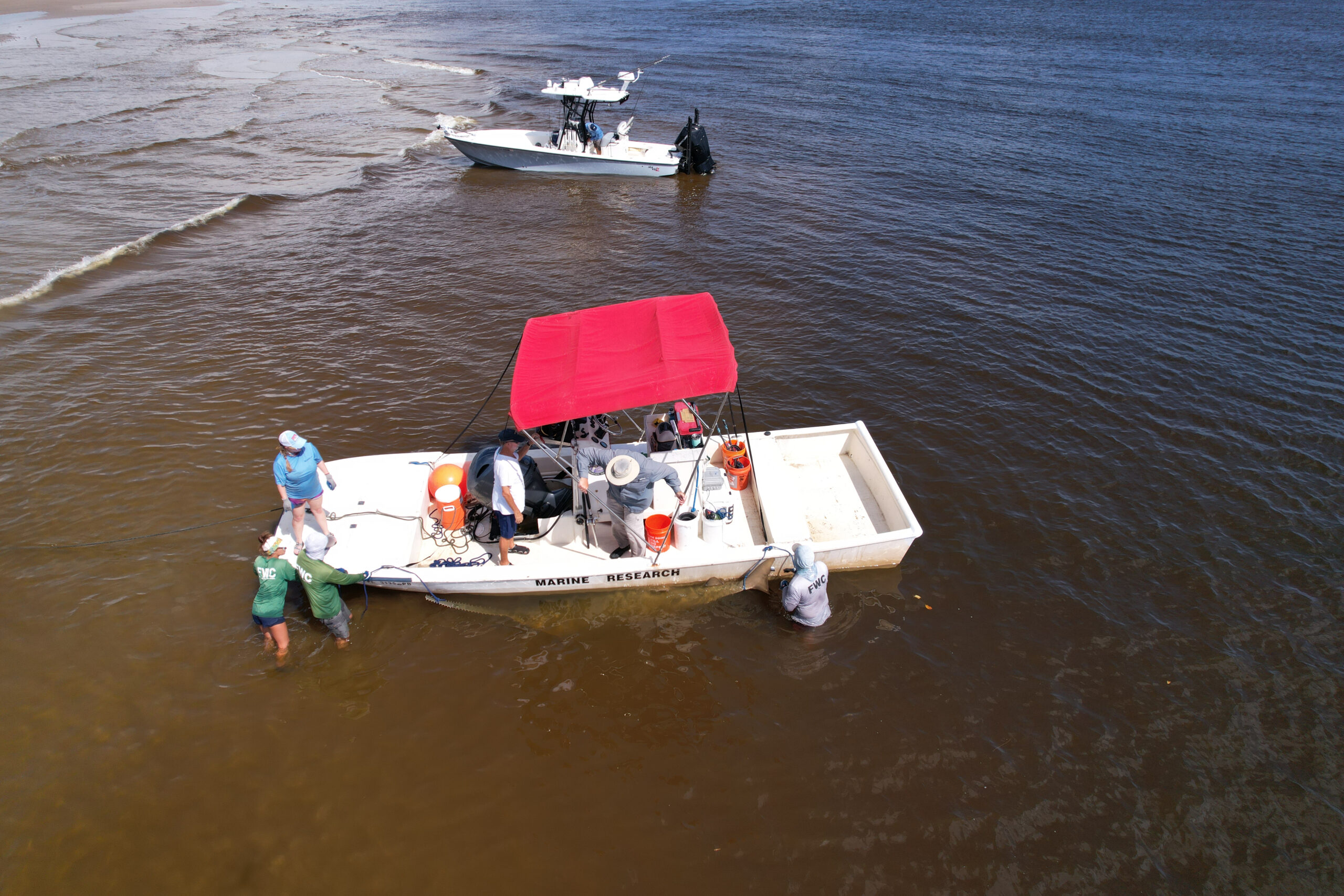
The FWC has been at the spear tip of sawfish conservation for decades, working with NOAA and scientists across the globe. Their tagging program is rewriting what we know about these fish: where they spawn, how far they travel, and what habitats they can’t live without.
And it’s working. Slowly, signs of recovery are surfacing. Juvenile sawfish are being spotted more often in shallow mangroves. Tagged adults are showing migratory patterns that could help identify critical “safe zones.” But the battle is far from won. Illegal harvest, accidental kill, and climate change still hammer their chances.
That’s why partnerships like this one—between scientists, TV personalities like Carter Andrews, and local captains like Britton—are so damn important. When the grit of fishing culture meets the backbone of science, you get a message that cuts through the noise.
Grit, Glory, and Responsibility
There’s a certain poetry in watching a sawfish swim away, tag blinking faintly under its skin, disappearing back into the murk. For Carter Andrews, it’s another story to tell, another reminder that fishing isn’t just about bending rods—it’s about legacy. For Captain Chris Britton, it’s pride in knowing his waters are still home to giants. For the FWC, it’s another victory in a long, uphill battle.
But for all of us, it’s a call to arms.
Protecting sawfish isn’t optional. It’s not some tree-hugging science project. It’s about keeping the raw, primal heartbeat of Florida alive. It’s about making sure that future generations can look into the water and see that shadow—a saw cutting through the tide, silent and unstoppable.
The Takeaway
Tagging sawfish in Stuart isn’t for the faint of heart. It’s sweat, blood, and backbone mixed with science and hope. It’s the grind of hauling in a prehistoric beast, the discipline of handling it with care, and the satisfaction of letting it go with a better chance at survival.
Carter Andrews summed it up best on the deck, salt streaking his face:
“Fishing’s always been about more than the catch. Today, it’s about the fight to keep these waters alive. And if tagging one sawfish helps save the whole species, then every drop of sweat is worth it.”
Stuart, Florida—where sawfish still carve their way through the flats—is a battleground. And with the FWC, Carter Andrews, and Captain Chris Britton leading the charge, this is one fight we can’t afford to lose.