
Riding the Mad Currents: Derek Redwine, The Marine Artist with Salt in His Blood
There are plenty of people out there painting the sea. You’ve seen them—pretty watercolor sailboats, pelicans frozen mid-flight, seashells arranged like cocktail garnishes on a Hampton condo wall. That art is made to soothe, to blend into the background while someone sips a martini and adjusts the thermostat.
And then there’s Derek Redwine.
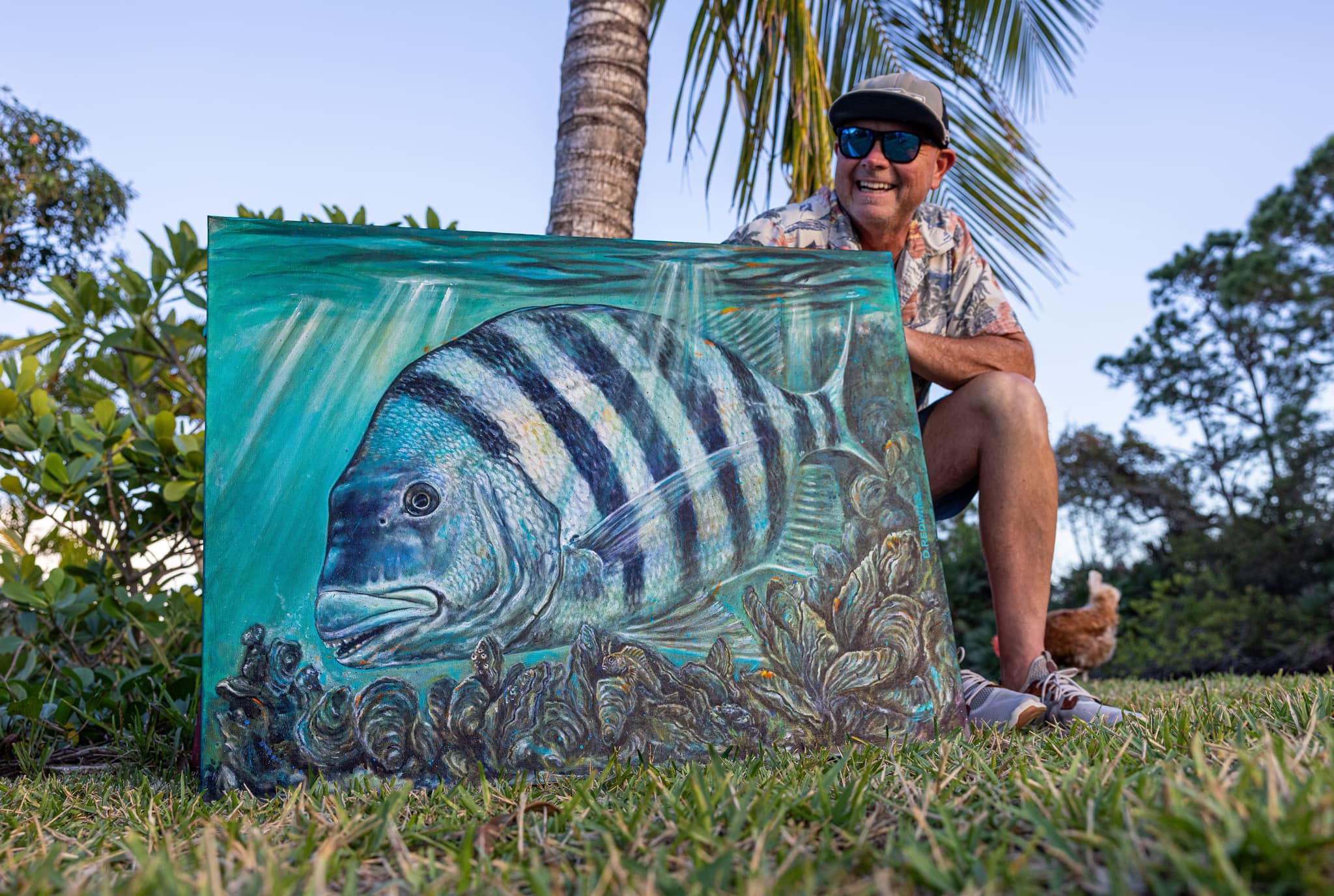
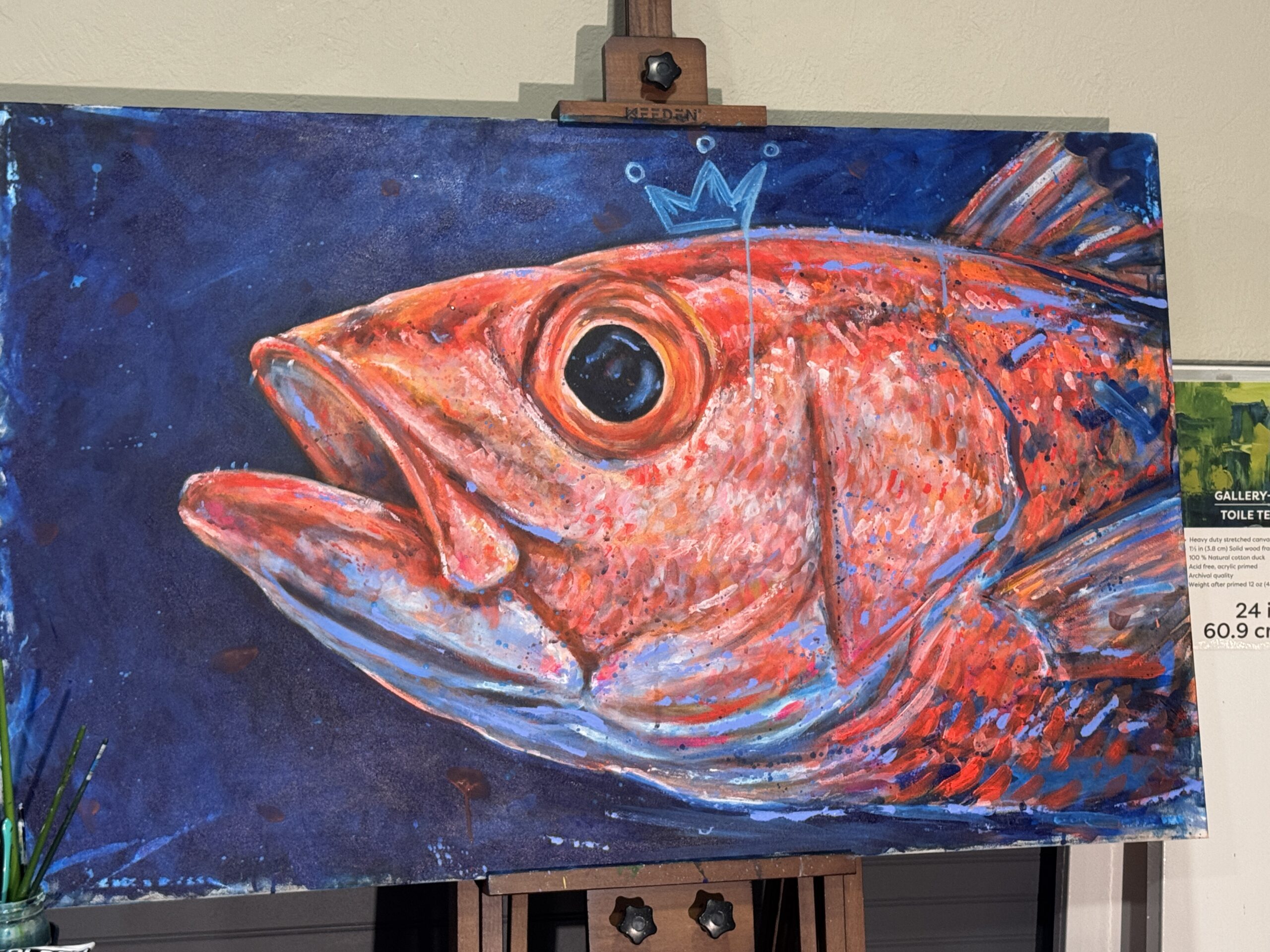
This is not a man interested in making you comfortable. His work doesn’t hang politely; it grabs you by the throat, drags you out into a riptide, and dares you to swim back. Redwine paints like a man with the Atlantic wired straight into his bloodstream—bleeding tarpon, marlin, hurricanes, and shipwreck ghosts onto canvas with oil, charcoal, rust, and salt.
This isn’t coastal décor. This is chaos made beautiful.
The Madness of the Sea
Redwine is less painter, more storm channeler. Where others see waves, he sees monsters. Where most feel a breeze, he feels the teeth of something ancient. His canvases aren’t whispers about the sea—they roar, howl, and snap their jaws like a hammerhead circling a slick of blood.
He doesn’t present the ocean as a postcard. He presents it as it is: a living beast.
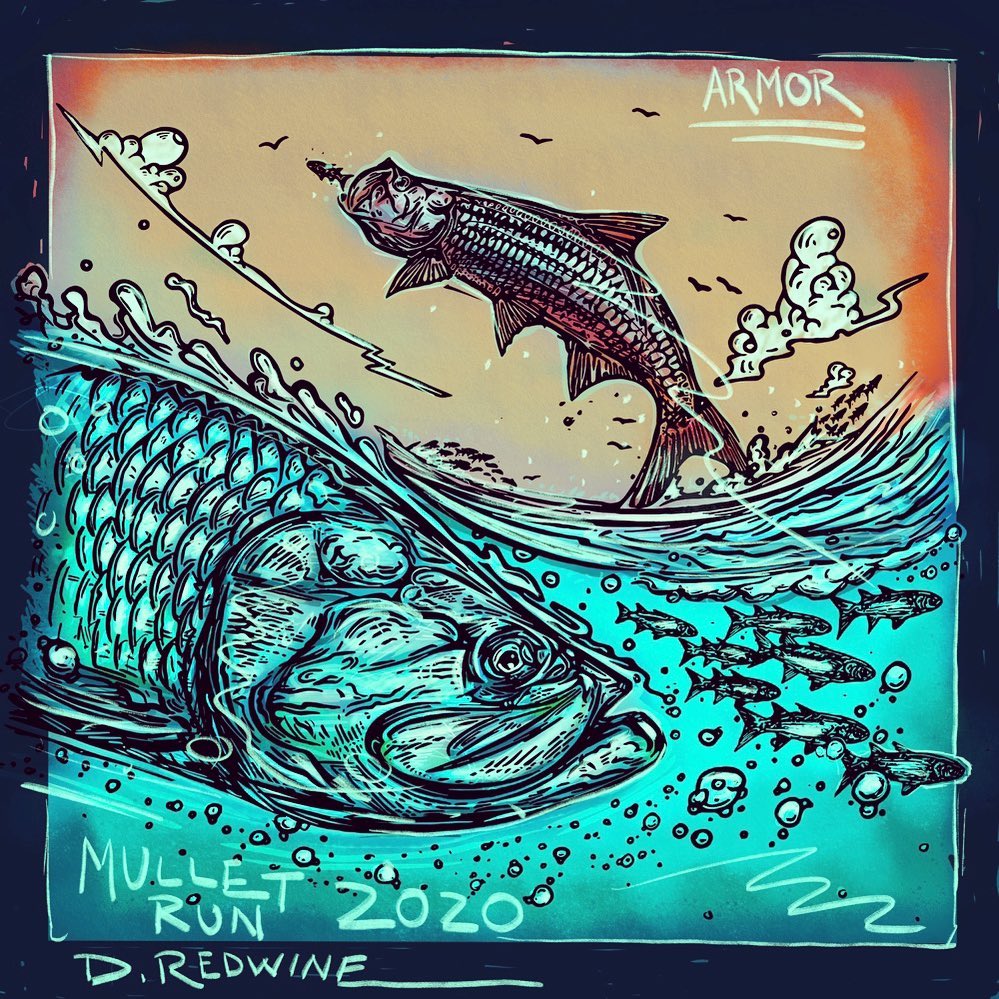
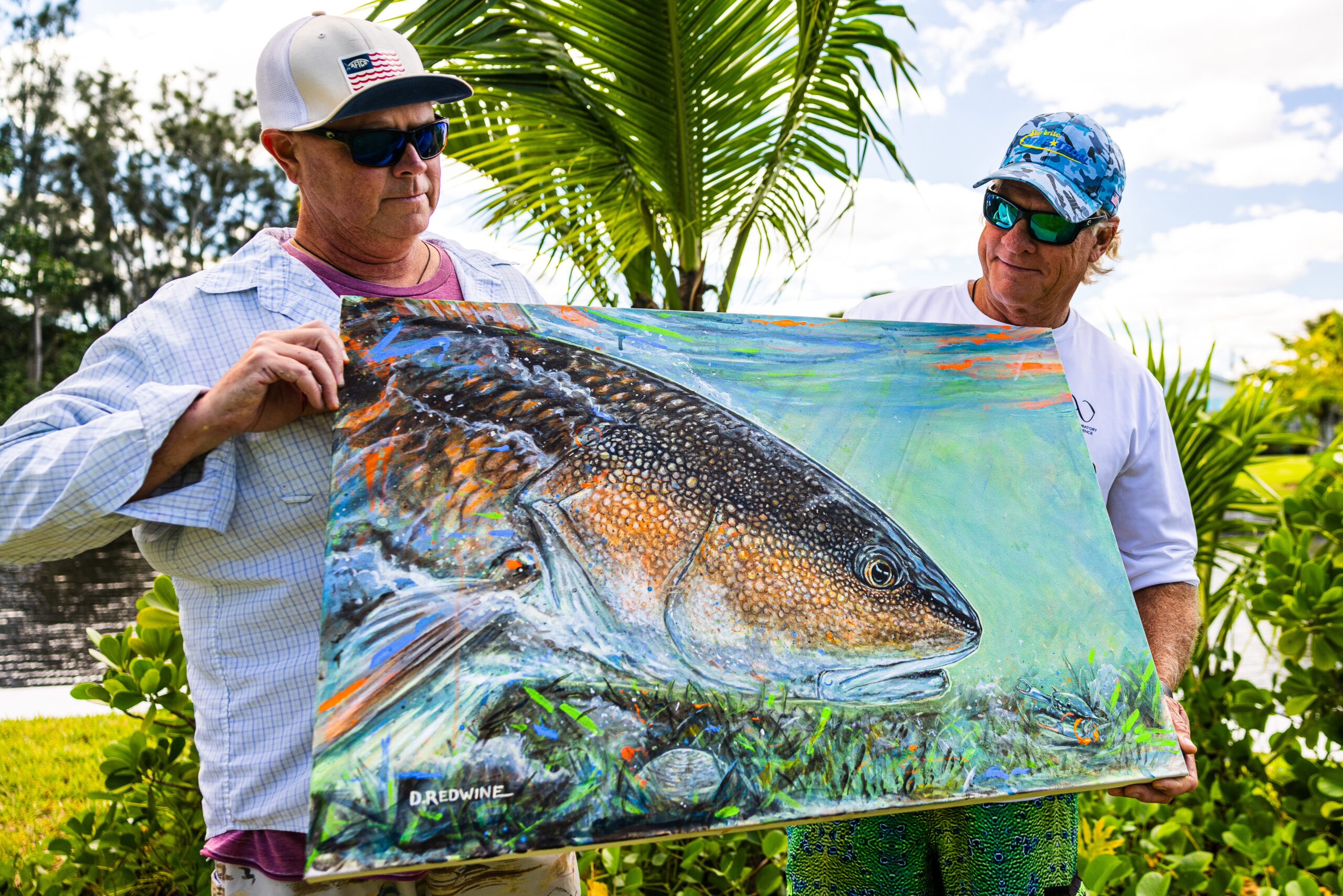
Stare at one of his tarpon and you can practically feel the drag screaming off the reel. Lock eyes with one of his marlin and you’re staring into a missile with scales. His brush doesn’t trace outlines; it detonates moments—tail kicks, violent breaches, water exploding into glass shards under a sun that doesn’t forgive.
Every piece is a reminder that the ocean is not your friend. It’s not there to hold your hand. It’s there to test your mettle, chew on your bones, and maybe—if you’re lucky—let you walk away with a story.
The Gonzo of Marine Art
If Hunter S. Thompson had traded whiskey and typewriters for brushes and salt, he might have ended up somewhere near Derek Redwine. There’s a gonzo pulse to everything Redwine touches—wild, manic, electric with the heartbeat of a man chasing truth through color and chaos.
This isn’t art for the yacht club wall. This is art for the adrenaline junkies—the anglers who crawl out of bed at 4 a.m. with diesel breath, tar on their hands, and salt in their beards. The ones who know the sea doesn’t forgive. The ones who understand that the line between beauty and brutality is thinner than a fluorocarbon leader stretched to its breaking point.
Redwine doesn’t aim for polite applause from gallery owners in pastel shorts. He paints for those who’ve watched lightning detonate across the Gulf Stream at midnight, who’ve felt a 200-pound fish shake the marrow in their arms, who know that beauty isn’t soft—it’s violent.
His art isn’t about stillness. It’s about the fight. The strike. The gill flare. The violence of survival.
Salt, Sweat, and Sketchbooks
Spend five minutes with Redwine and it clicks: this man doesn’t live in the same frequency band as the rest of us. He talks like a fisherman, curses like a deckhand, and burns through ideas like a storm eats through coastlines.
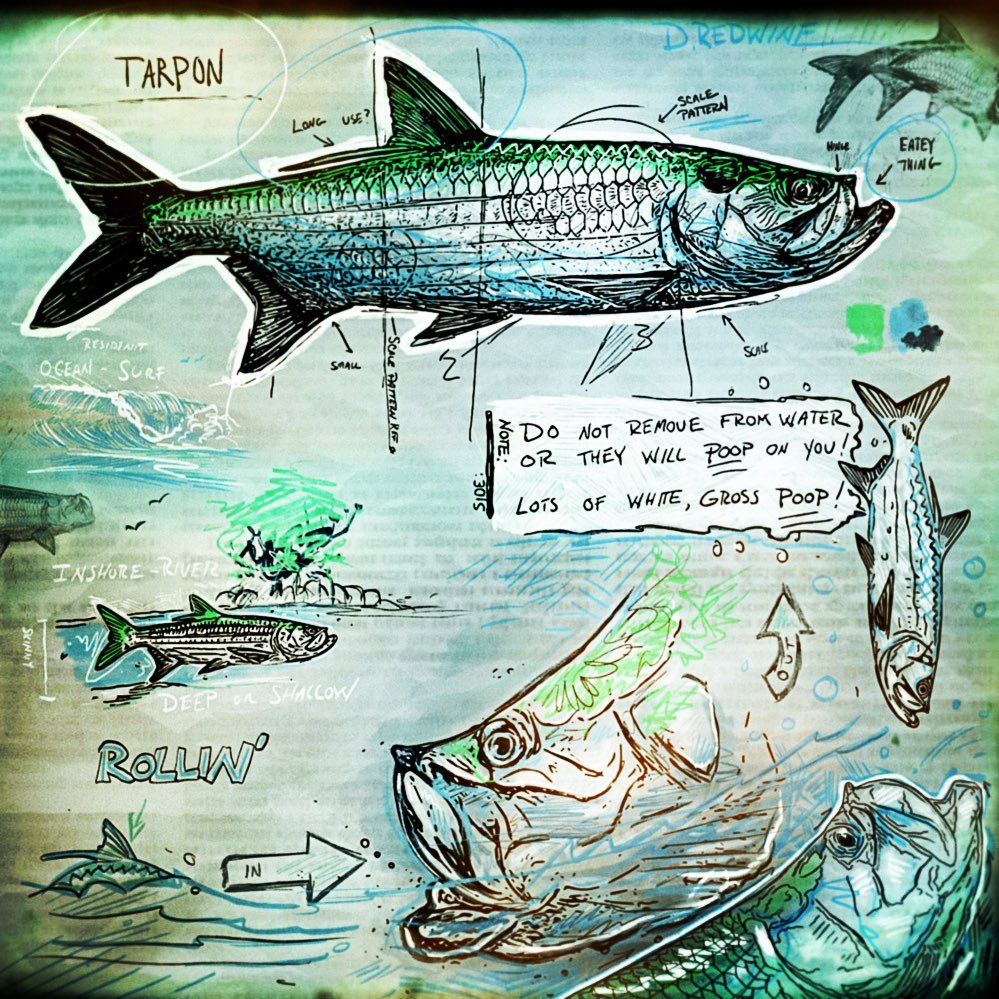
He’ll scratch a tarpon onto a beer-soaked napkin at midnight, then rework it into a mixed-media leviathan that looks like Poseidon’s fever dream. He’s not afraid to make a mess—splattered ink, rust-stained textures, jagged brushstrokes that look more like scars than lines.
There’s no polish for polish’s sake. Just honesty. Just raw, exposed nerve. Just the brutal beauty of imperfection.
It’s art that bleeds. And it bleeds salt.
From Canvas to Conservation
But Redwine isn’t just chasing chaos for chaos’s sake. Under the fury and madness, there’s purpose. His work is as much about conservation as it is about expression.
The fish exploding across his canvases aren’t just symbols of wild beauty—they’re ambassadors. Many of the species Redwine paints—tarpon, marlin, sailfish—are threatened by overfishing, habitat destruction, and warming seas. His art is a reminder: these animals aren’t abstractions, they’re warriors fighting for survival.
Redwine has partnered with marine conservation groups, lending his art to campaigns aimed at protecting critical species and waters. His pieces have shown up at fundraisers for reef restoration, tarpon tagging projects, and coastal preservation efforts. He’s not shy about putting his brush where his mouth is—using his art as a megaphone for the ocean’s cause.
And it makes sense. When you stare into one of his fish, you’re not just looking at pigment. You’re looking at a living, breathing creature that demands respect. His paintings carry the unspoken message: Protect this. Or lose it forever.
Redwine himself has said the ocean isn’t just inspiration—it’s responsibility. “The sea gives us everything,” he told one conservation group, “and it can take everything away. My job is to show what’s at stake.”
Why It Matters
In a world where coastal art too often looks like screensavers and rental condo wallpaper, Derek Redwine is standing on the bow, brush swinging like a harpoon, screaming into the gale.
He’s saying the ocean isn’t polite. It’s not your pool to float in. It’s a machine older than time, sharper than any blade, hungrier than any predator, and wild enough to make gods sweat.
And that’s why his art matters. It’s not about decoration—it’s about confrontation. It forces you to look at the ocean not as a backdrop, but as the main event. It reminds you that the sea isn’t tame. And it sure as hell isn’t guaranteed.
The Ride
So next time you see a Derek Redwine piece, don’t just nod and move on. Don’t treat it like background noise.
Pour a stiff drink. Crank something loud—Motörhead, Zeppelin, maybe a thunderstorm track for full effect. Stare into the canvas until the scales start to shimmer and the water pulls you under. Feel the tarpon charging your ribcage, the marlin’s bill slicing the surface, the storm surge swallowing your lungs.
That’s the point. That’s the ride. That’s Derek Redwine.
And if you walk away shaken, sweating, maybe with salt burning your eyes—good. That means the art worked.
Because the ocean isn’t here to pat you on the back. It’s here to test if you belong.