
How CCA Washington and PSRF Are Restoring Puget Sound’s Native Oyster
By TideBandits
Some conservation work happens in broad daylight, with press releases and photo ops. Other work happens ankle-deep in cold tideflats, under cover of darkness, with headlamps on and mud up to your knees.
The restoration of Washington’s native Olympia oyster—or “Olys,” as they’re known locally—falls firmly into the second category.
With support from CCA Washington, the Puget Sound Restoration Fund (PSRF) wasted no time putting boots on the ground and hands in the water, launching a multi-front effort to rebuild one of Puget Sound’s most important—and most diminished—marine species.
Midnight Missions for a Keystone Species
To kick off seed production, PSRF teams headed out onto Puget Sound tideflats in the dead of night, carefully collecting more than 1,500 wild Olympia oysters to serve as broodstock for their conservation hatchery.
This isn’t casual harvesting. These oysters are genetic lifelines—carefully selected to help rebuild resilient, locally adapted populations.
So far, that effort has paid off in a big way. Those broodstock oysters have already produced more than 40 million larvae, microscopic but mighty. Once ready, the larvae will cement themselves to clean shell substrate before being outplanted to tideflats in north Puget Sound, jumpstarting oyster populations that have been pushed to the brink by pollution, habitat loss, and overharvest.
Olympia oysters may be small, but their impact is massive. As filter feeders, they clean the water, stabilize sediments, and create habitat that benefits everything from juvenile fish to crabs and forage species.
A First-of-Its-Kind Oyster Rearing System
CCA Washington’s support also helped fund the design and installation of Washington State’s first-ever oyster rearing system at the Northwest Maritime Center in Port Townsend.
This new system adds critical capacity for oyster recovery—allowing larvae to be grown, monitored, and prepared for restoration in a controlled environment. Larvae were expected to be introduced into the system in February, marking another milestone in building long-term infrastructure for Puget Sound shellfish recovery.
This isn’t a one-off project. It’s about creating systems that can keep producing oysters—and results—year after year.
Finally, Washington Gets a Shell Recycling Program
Here’s a wild stat: until now, Washington State didn’t have a shell recycling program for oyster restoration.
That’s changing.
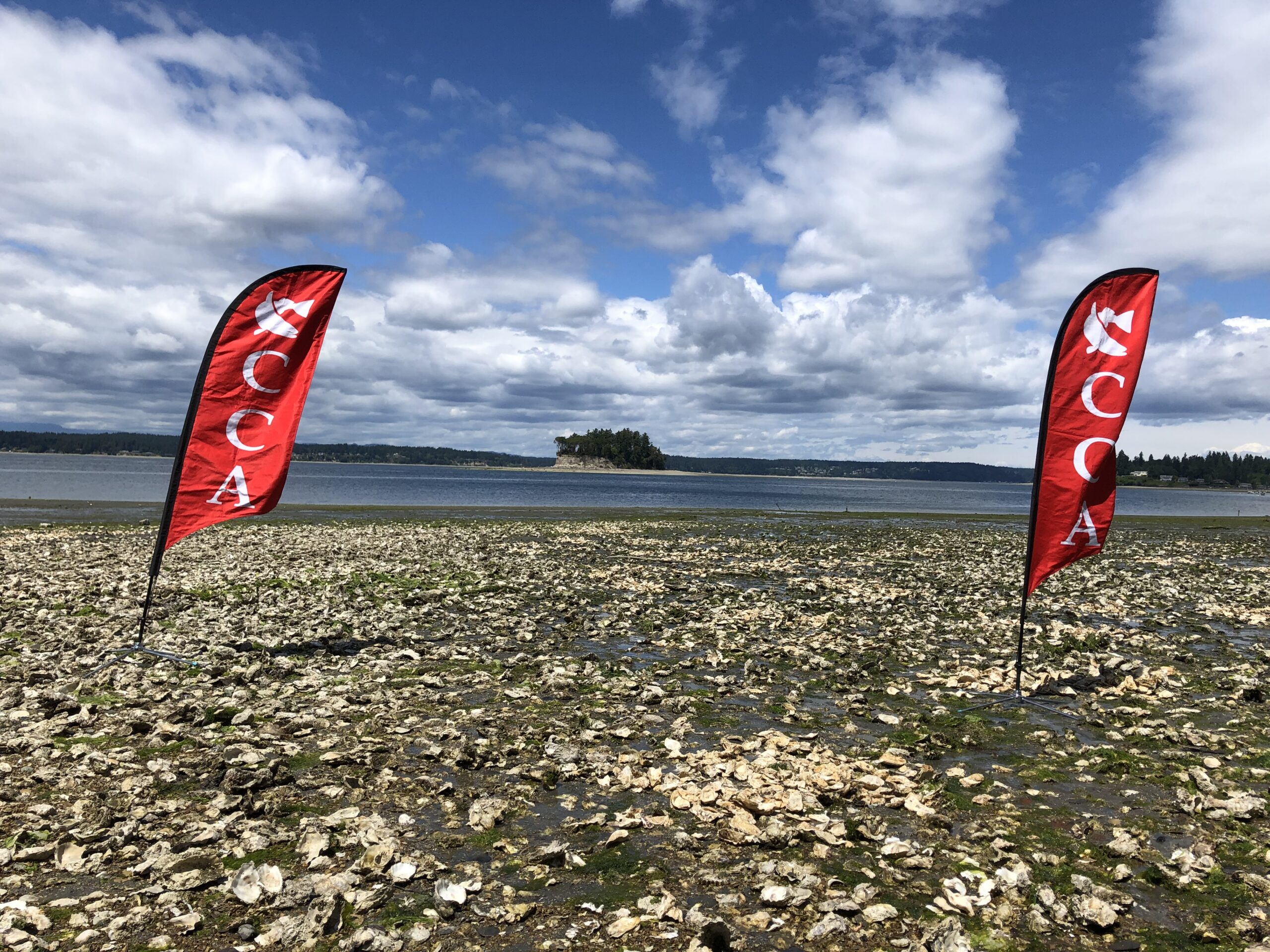
PSRF and CCA Washington took the first major step toward fixing that gap by collecting nearly 2.5 cubic yards of oyster shell from more than 15,000 oysters consumed at one of the state’s biggest annual shellfish events—Elliott’s Oyster House’s Oyster New Year celebration.
Instead of heading to the landfill, those shells are now curing outdoors, being naturally cleaned by sun and rain. Once cured, they’ll be reused as substrate for future restoration projects—giving new oyster larvae the hard surface they need to settle and grow.
It’s a simple idea with huge impact: oysters beget oysters.
Why This Matters for the Whole Ecosystem
Olympia oyster restoration isn’t just about shellfish. Healthy oyster beds improve water quality, create complex habitat, and support food webs that benefit salmon, crab, forage fish, and countless invertebrates throughout Puget Sound.
Taken together, the projects supported by CCA Washington are doing exactly what conservation should do—moving the dial, not just talking about it.
They’re also opening the door for hands-on volunteer opportunities for CCA members across the Puget Sound region, connecting anglers and coastal communities directly to the recovery of the waters they care about.
This is how real restoration happens: local partnerships, smart science, and people willing to show up—sometimes in the middle of the night—to put things back the right way.