

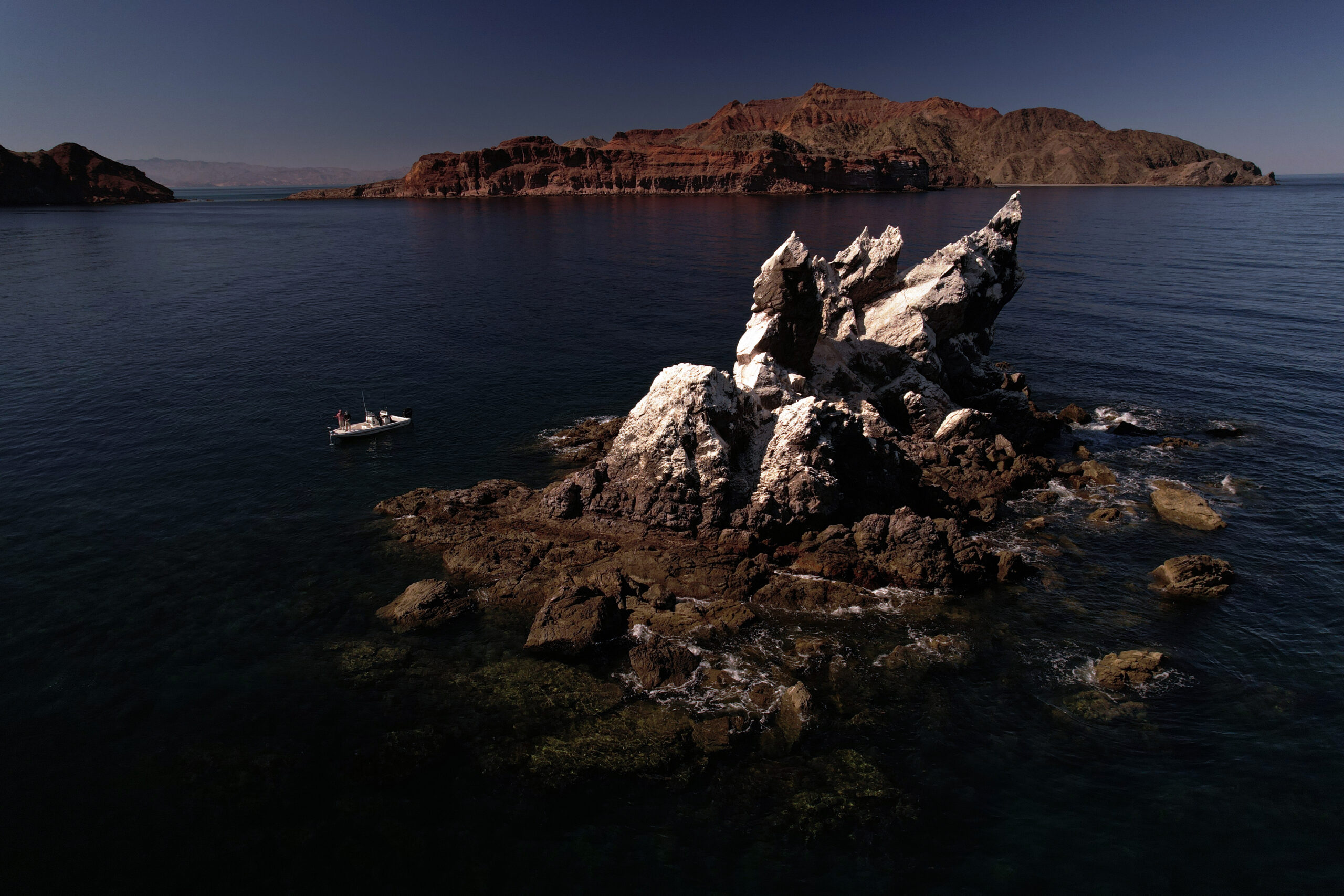
Baja Bound for Big Fish
By Jason Arnold
Crossing into Baja California
We set out before dawn from Southern California, two trucks towing trailer boats and a head full of fishing dreams. The plan: drive down the length of Baja’s northeastern coast to reach remote Gonzaga Bay, specifically the rustic camp at Papá Fernández. With coffee in our cups and excitement in the air, we approached the U.S.-Mexico border as the sun began to rise. Rather than brave the hectic Tijuana crossing, we opted for the Calexico/Mexicali East port of entry, known to be roomier and easier for vehicles with trailers This crossing opens early (but closes by late evening), so timing was key. We rolled up to the border inspection with passports and Mexican auto insurance papers ready, and our boat registrations in hand just in case. A friendly officer waved us through after a quick look at our gear – a smooth start to our Baja adventure.
Entering Mexicali, we navigated through the city outskirts following signs for Highway 5 south toward San Felipe. Almost immediately, the scenery transformed. Busy streets gave way to open desert highways. We knew from experience to stop at the immigration office just beyond the border for our tourist permits (FMMs) and to double-check we had all essential paperwork. Crossing with a boat also meant ensuring no restricted items were on board – in Mexico, firearms are a no-go, and officials can inspect trailers at random. Fortunately, our preparation paid off and soon we were officially on Mexican soil, Baja bound with nothing but open road and adventure ahead.
Travel Tip: When crossing into Baja with a boat, plan ahead:
- Choose a less congested crossing like Mexicali East or Tecate for an easier trailer tow
- Get Mexican liability insurance and tourist permits before or at the border – they’re required for legal travel.
- Travel early to avoid border traffic and to ensure daylight driving; some crossings have limited hours for vehicles with trailers.
- Expect a brief inspection – officials may ask where you’re headed and check for prohibited items (no guns or excessive ammo). A little Spanish (“Pesca en Bahía Gonzaga” – fishing in Gonzaga Bay) can go a long way in conversation.
Down the Baja Highway 5
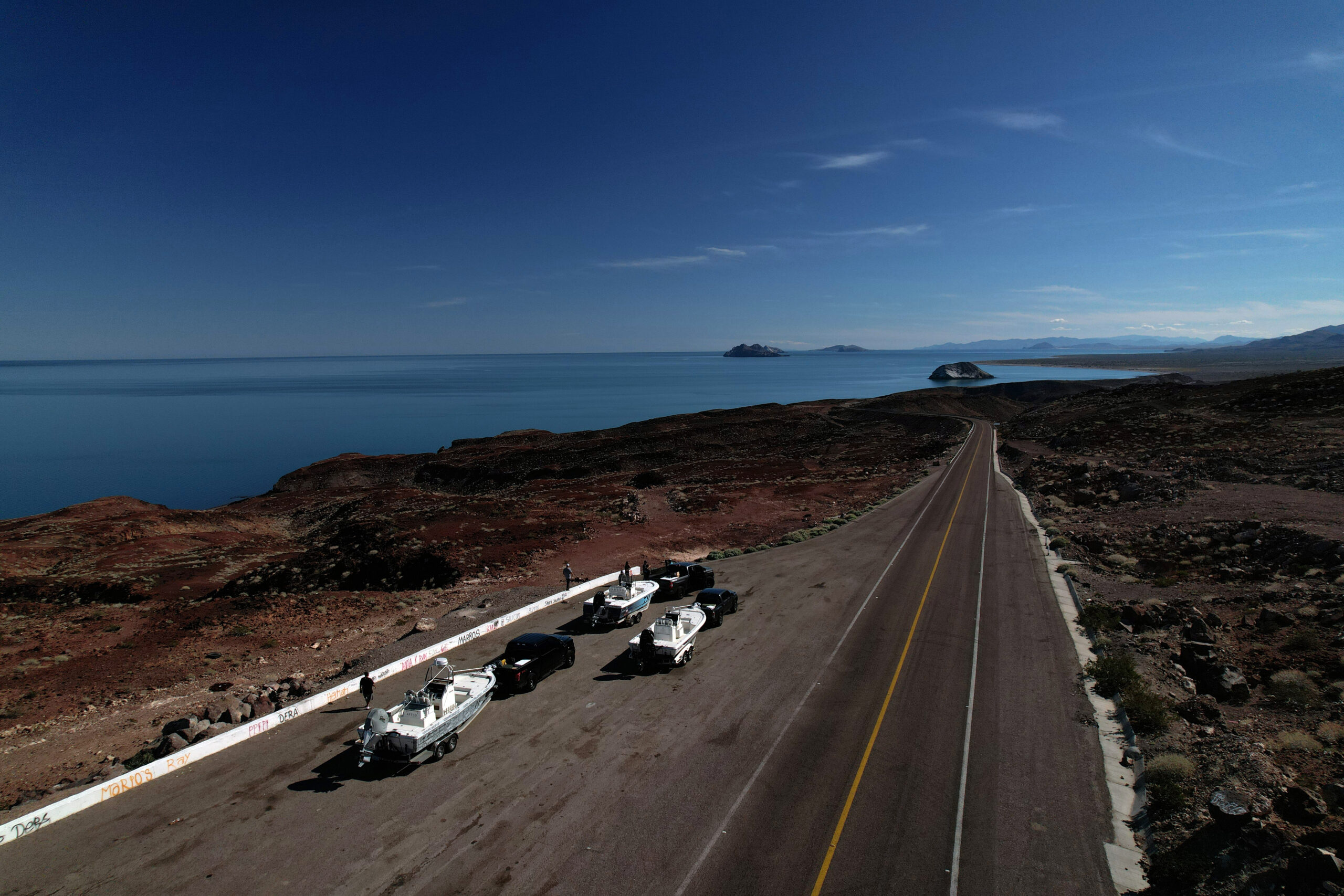
Once past Mexicali, we headed south on Mexico’s Highway 5, a route that has seen significant improvements over the years. Not long ago, parts of this highway were bone-jarring dirt tracks; now the road is fully paved all the way to Gonzaga Bay. The first stretch ran arrow-straight through the desert floor. To our west, the Sierra de Juárez mountains rose hazy blue, and to the east the vast expanse of the Laguna Salada dry lake shimmered under the morning sun. We cruised by occasional clusters of cardón cacti and creosote bushes, the trailers tracking smoothly behind our 4×4 trucks.
After a couple of hours, we reached the coastal town of San Felipe, our midway pit stop. San Felipe is the last sizable town and a traditional jumping-off point for Upper Sea of Cortez adventures. We topped off our gas tanks here – a crucial move, as fuel can be scarce further south. With boats in tow, our convoy drew curious stares as we pulled into a roadside taquería for an early lunch. We savored fresh fish tacos and ice-cold cola, chatting with locals about the road ahead. They mentioned a few potholes south of San Felipe and a small detour where a bridge was under repair, but nothing too daunting. Bellies full, we hit Highway 5 again, knowing the most scenic (and remote) part of the drive was yet to come.
South of San Felipe, the highway hugged the coastline at times, revealing breathtaking glimpses of the Sea of Cortez on our left – brilliant turquoise water meeting stark desert shores. The pavement was relatively new, but we remained vigilant; surprise dips (vados) and potholes the size of hubcaps can still appear out of nowhere on Baja roads .Our speed dropped as the road wound through low hills and arroyos. In some spots, construction crews had clearly battled Mother Nature’s fury – sections of asphalt patched after seasonal flash floods. We drove past the small hamlet of Puertecitos, marked by a cluster of houses and a lonely Pemex gas station that sometimes had fuel (today, it looked closed). From here, the route became even more isolated. We carried extra fuel in jerrycans just in case, a standard practice for remote Baja travel.
A roadside pause south of San Felipe: our truck and 22-foot center-console boat take a break amid Baja’s desert expanse. The newly paved Highway 5 stretches ahead, but occasional detours and potholes remind us this is still wild country.
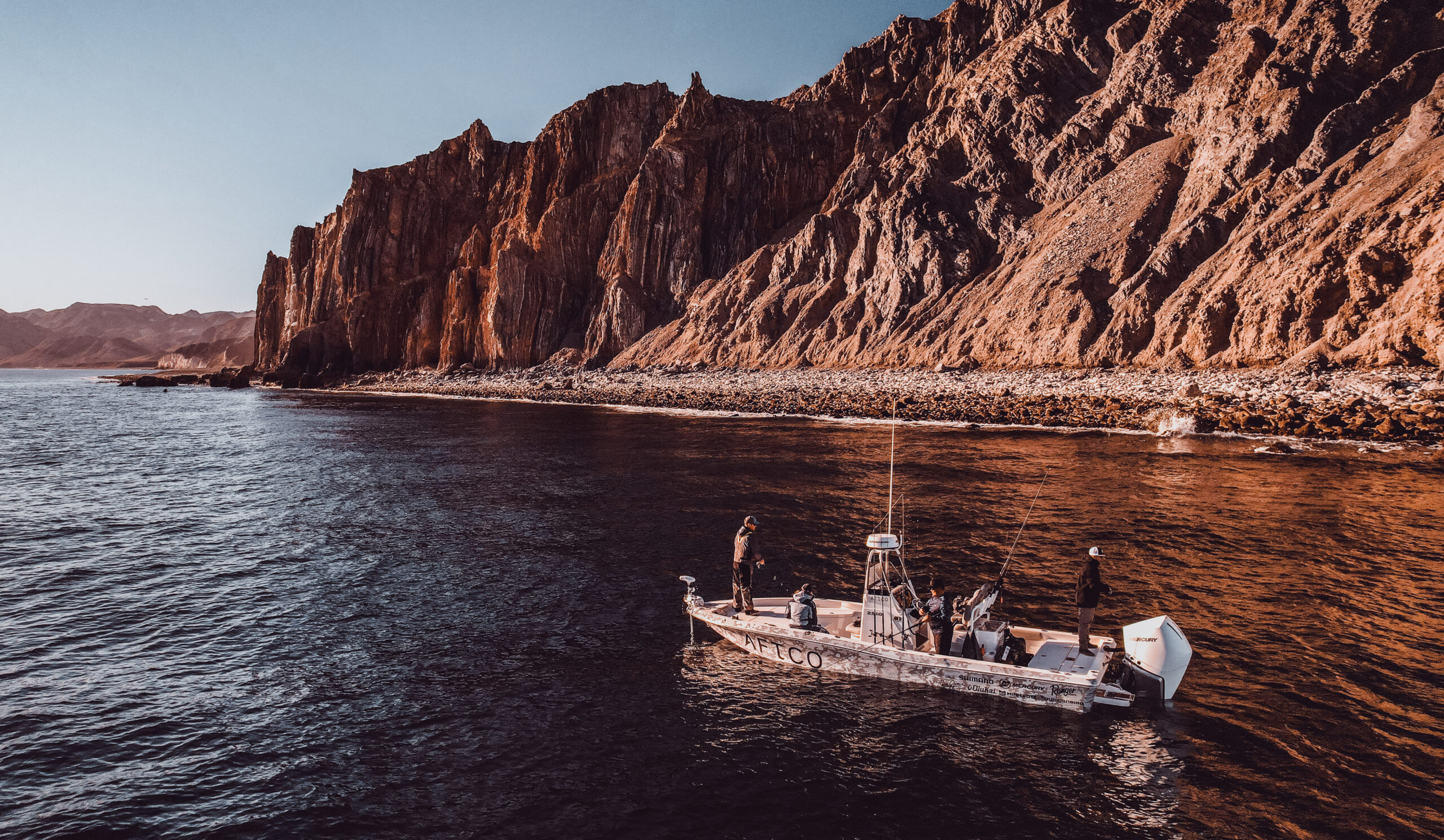
As we descended a rise, Gonzaga Bay finally came into view – a stunning crescent of calm water framed by rugged islands and a backdrop of russet mountains. The Sea of Cortez sparkled in afternoon light, its surface so glassy it reflected the sky. After hours of dusty driving, the sight of that blue bay was like an oasis. We soon encountered a military checkpoint just north of the bay, a normal part of travel in Baja. Young soldiers in crisp uniforms politely asked us a few questions (“¿A dónde van?” – Where are you going?). “Bahía Gonzaga, a pescar” we replied with smiles, pointing to the boats. They peeked into our coolers and truck beds – likely checking for weapons or contraband – then wished us luck on our fishing trip and waved us on. Barely five minutes later, a handmade sign for “Papa Fernández” appeared, directing us off the highway onto a dirt track towards the beach.
Arrival at Papá Fernández Camp
Pulling into Papá Fernández felt like stepping back in time to Baja’s golden age of fishing camps. The “camp” is a humble settlement on a sandy point at the northern end of Gonzaga Bay, established in the 1950s as a sportfishing outpost. We passed a small restaurant with a faded wooden sign, a cluster of palapa-roofed huts and ramadas, and a few other RVs and trucks set up by the beach. This would be home for the next few days. The salty breeze carried the tang of the sea mixed with desert sage. After the long drive, we were eager to stretch our legs. We found an open spot to set up camp, parking the rigs above the high-tide line on a shell-covered beach. Our “lodging” here was simple: two tents and the pickup truck beds. Papá Fernández does offer a few basic cabanas and beach camping for those who come without their own gear, and even a small restaurant serving hearty Mexican meals and cold sodas from 8am to 8pm daily. The camp’s manager (and Papá’s son), Chi Chi, ambled over to greet us. He welcomed us warmly in a mix of Spanish and English, pointing out where we could find the restroom (an outhouse by a cluster of date palms) and the water spigot to refill our jugs. We asked about dinner and he grinned, saying, “Mi hija hace chile relleno esta noche” – his daughter was making chile relleno tonight. We knew we’d be stopping by the little restaurant later; the reputation of those chile-stuffed peppers had reached us even back in California.
From our campsite, the view was postcard-perfect. To the south, across the bay, lay the protected cove of Alfonsina’s (another little resort) and the hazy outline of Isla San Luis Gonzaga. To the east, Isla Willard sat offshore, shielding Papá Fernández’s beach from the open gulf waves.This geography blessed the area with calm waters – ideal for launching small boats and for providing nearby fishing grounds around the islands. As the sun dipped lower, we busied ourselves readying the boat for an early launch the next day. Rods were assembled, reels checked and drags set. A quick walk along the beach revealed panga skiffs pulled above the tide line and a makeshift launch ramp composed of hardened sand and stones. We noted the tide’s edge; the Gulf of California’s tides can be dramatic – fluctuating 10 to 20 feet between high and low (.A local fisherman at the camp advised us: “La marea baja mucho. Hay que mover la lancha temprano,” meaning we’d need to launch early on a high tide or risk a long haul over wet sand later. With that in mind, we turned in early under a canopy of stars that night, lulled to sleep by the gentle lap of sea on shore and the distant call of a coyote in the hills.
Launching at the Beach
Dawn at Gonzaga Bay came gently. A pale pink glow crept over the eastern horizon, gradually illuminating the desert mountains behind us. We were up before 5:00am, the air cool and still. This was the moment of truth: launching our 22-foot boat off a beach with no concrete ramp. Thankfully, both trucks were four-wheel drive and we had come prepared with a tow strap and plenty of manpower. We backed one truck toward the water’s edge, guiding the trailer until the rear wheels kissed the soft sand. One of us waded into the water, chilly at this hour, to help float the boat off the bunks. The Sea of Cortez was calm as a lake at first light – perfect conditions. With a bit of coordinated effort, the boat slid free and bobbed in the shallows. We were afloat! We anchored the boat just offshore and quickly moved the trailer back up to firm ground. (No one wants their truck stuck axle-deep in Baja sand – that’s a story you only need to live once.) By the time the sun peeked over Isla Willard, our gear was loaded, the outboard motor warmed up, and we were ready to fish.
Before heading out, we double-checked our safety equipment: life vests for everyone, a VHF radio set to channel 16, GPS and fishfinder humming, and a well-stocked cooler of ice, water, and sandwiches. Out here, you must be self-sufficient; there’s no marina or tow service if something goes wrong. A quick radio call confirmed the weather forecast – light winds in the morning, potentially building out of the south by afternoon. We decided to make the most of the calm morning to chase our top gamefish targets.
Cabrilla: The “Junkyard Dog” of the Coast
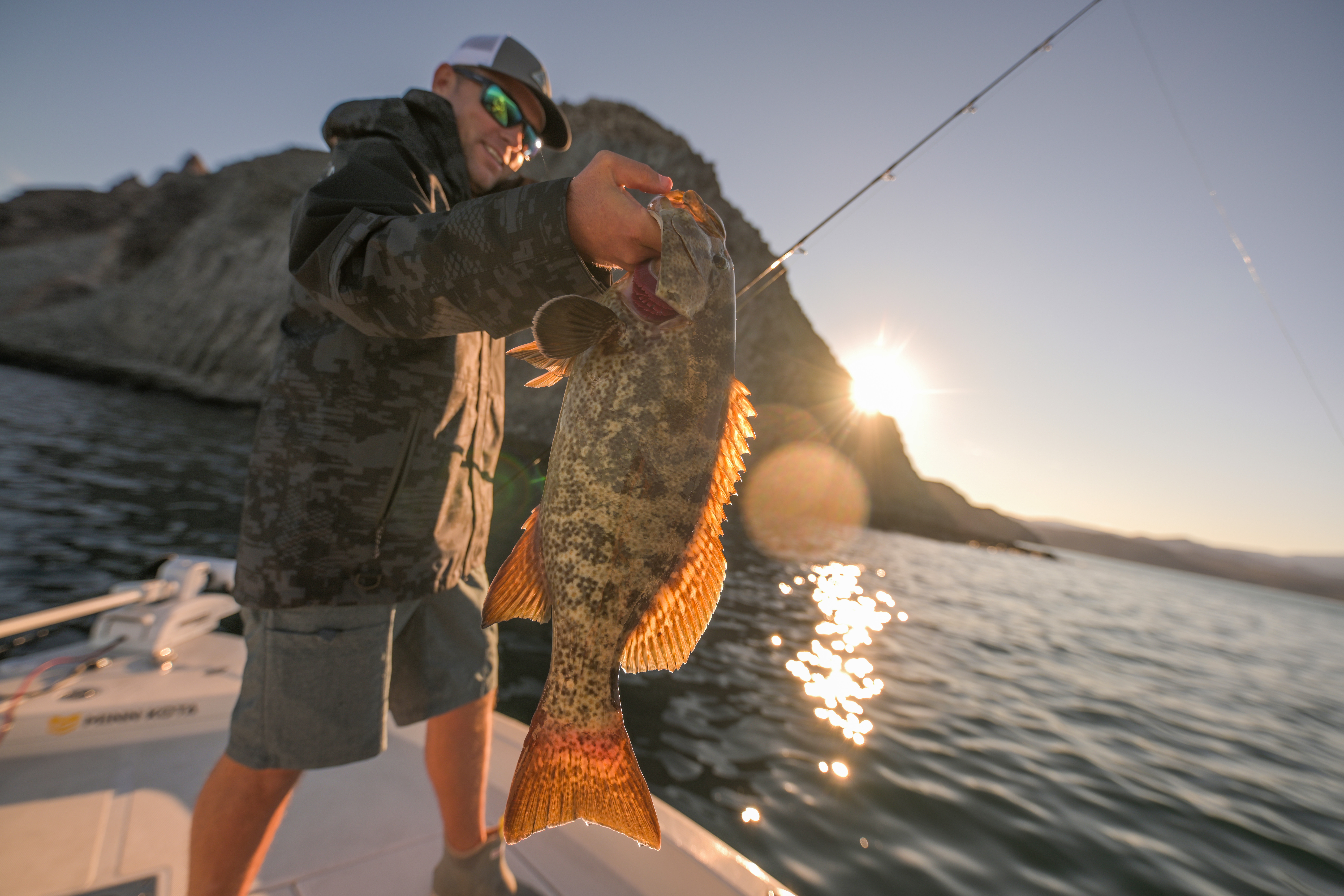
Our first mission was to find leopard grouper, known locally as cabrilla (pronounced kah-BREE-ya. These brassy fighters are the pride of the Sea of Cortez inshore fishery – pugnacious, beautifully patterned grouper that lurk around rocky reefs waiting to ambush prey. We pointed the bow north toward a series of jagged volcanic points and small islets lining the coast north of camp. This shoreline, studded with boulders and cactus-topped bluffs, looked fishy to our eyes – exactly the kind of structure cabrilla love. The boat skimmed across glassy water, leaving a V-shaped ripple. Pelicans still roosting on shore watched us putter by, and a pod of dolphins surfaced briefly in the distance, perhaps herding baitfish.
At our first spot, a rocky outcropping that plunged into deep green water, we killed the engine and let momentum carry us closer. The fishfinder showed clusters of bait and structure below. It didn’t take long to get action. We cast large deep-diving crankbaits (Rapala X-Rap Magnums in mackerel color) toward the rocks and trolled slowly along the drop-off. The method was simple: get the lure down 15-20 feet and bang it against the reef structure to provoke a reaction strike. It worked – BAM! The first hit nearly wrenched the rod from my hands. The rod tip lunged toward the water and the drag screeched as a strong fish tried to bulldoze back into the rocks. I leaned back and cranked hard, muscle memory kicking in to prevent the fish from finding a snag. After a short but fierce tug-of-war, a bronze-flanked cabrilla surfaced, all fanned fins and bulging eyes. “¡Cabrillón!” yelled my friend, netting our first fish of the trip – a respectable grouper around 8 pounds. These fish hit like freight trains despite their size, and sure enough, the lure’s treble hooks were mangled from the fight. We high-fived like giddy kids. In the golden morning light of Gonzaga, with a cabrilla on deck, all the long miles down felt totally worth it.
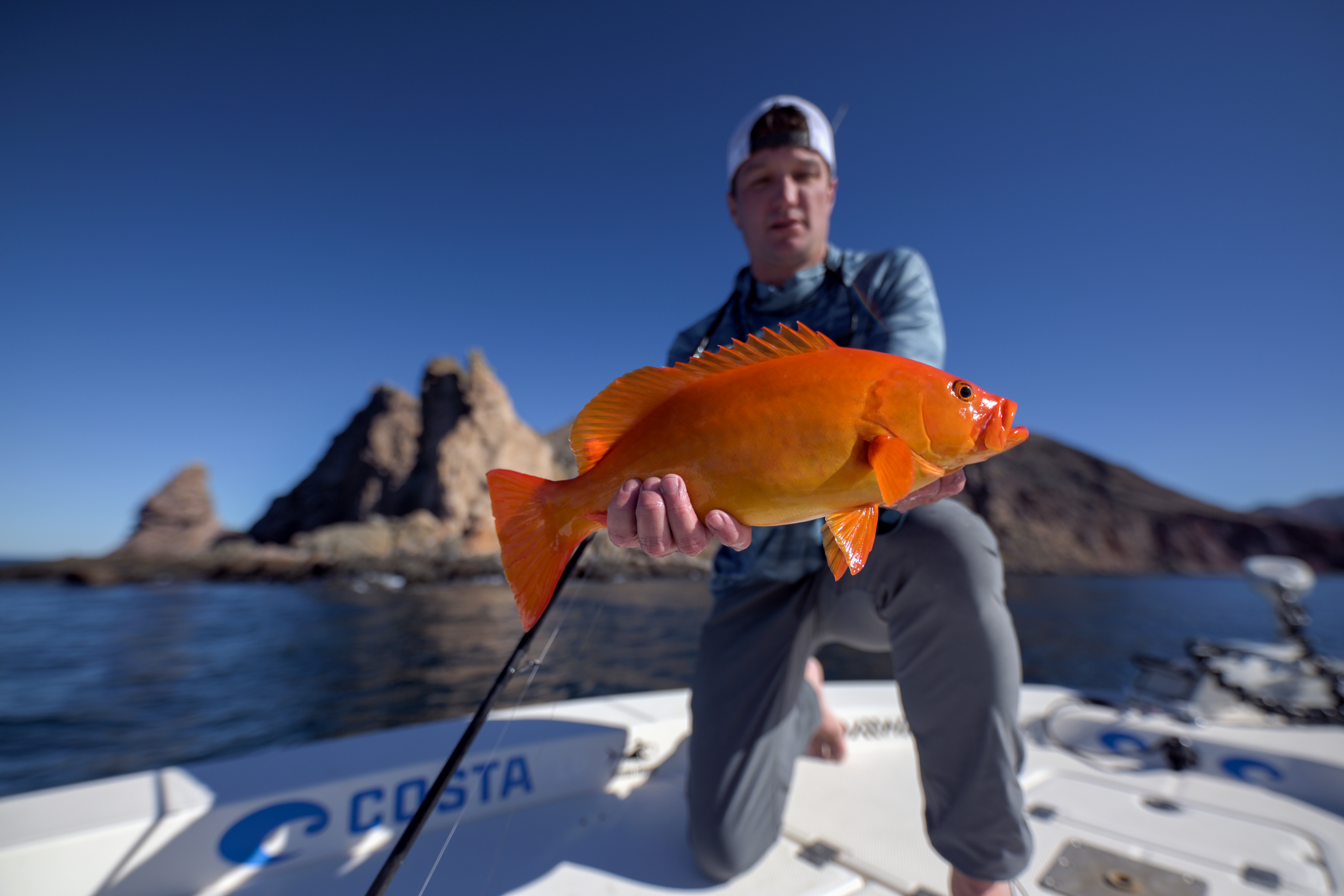
We continued working that shoreline and a couple of small islands nearby. Cabrilla proved both abundant and eager. Casting chrome-blue surface iron jigs and 6-inch swimbaits also produced strikes. At one point, I tossed a topwater plug near a boiling bait school and watched in awe as a cabrilla exploded on it in the shallow wash – these fish are nothing if not aggressive. Most were in the 5-10 pound “bread-and-butter” range , though each felt larger in the moment, given their determination to run for cover. We practiced selective harvest, keeping a few for dinner and releasing the rest. (The camp had a cleaning table and we looked forward to fresh fish tacos later.) One catch, however, we deemed too special to keep: as I reeled in what I thought was another average grouper, the water by the boat suddenly flashed brilliant gold. My buddy let out a whistle as I netted the fish – it was a rare golden-phase leopard grouper, its scales a striking yellow-orange, glowing like a treasure in the sun. Local lore calls these golden grouper “la reina” (the queen of the Cortez) and many fishermen release them out of respect. We snapped a quick photo of this 12-pound beauty and gently released her back to the depths, hoping the act would bring us a bit of Baja luck.
Fishing Gear Tip: Gonzaga Bay’s rocky reefs will test your tackle. A few pointers to improve your odds:
- Heavy Line & Leader: Go heavy on your gear. 50–80 lb braided main line and at least a 60 lb fluorocarbon leader are wise for cabrilla. These grouper will dive into rocks; lighter line risks heartbreaking break-offs.
- Strong Hooks: Upgrade your lure hardware. Stout 4X treble hooks or single replacement hooks and beefier split rings prevent straightening out during violent strikes .
- Wire Leaders When Necessary: The Sea of Cortez is home to toothy species like sierra mackerel and snapper that can slice through mono leader.Keep a few wire leaders or heavy knottable wire handy to save your prized lures when those predators show up.
- Lure Selection: Bring a mix of diving plugs, metal jigs, and surface lures. Cabrilla love to hit crankbaits and jigs near structure, and they won’t shy from topwater if the opportunity presents. Yellowtail will nail fast-worked yo-yo jigs or surface iron, while sierra mackerel respond to trolled spoons or magnum minnows.
- Spare Everything: The remote location means no tackle shops in sight. Pack extra line, hooks, lures, and even spare rod tips. If you lose your go-to jig to the rocks (which will happen), you’ll want backups ready.
Chasing Yellowtail in Blue Waters
By mid-morning, the sun was higher and a light breeze riffled the bay’s surface. With a half dozen cabrilla in the cooler, we decided to switch tactics and target yellowtail (California yellowtail, a strong fighting jack) that roam these waters. Word around camp was that yellowtail often patrolled the deeper pinnacles off the Enchanted Islands (Islas Encantadas) to the south of Gonzaga Bay, or near a spot the locals dubbed the “Golden Reef” offshore. We motored about 5 miles south, toward a cluster of rocky islets, watching for working birds or surface bait – telltale signs of predatory fish below. The water here dropped to 100+ feet deep and the color turned a deep sapphire blue. We rigged up heavier irons and knife jigs, ready for the trademark bulldog fight of a yellowtail.
Our fishfinder lit up with dense marks about 80 feet down near one pinnacle. “Fish on the meter!” I shouted. We quickly cut the engine and began a controlled drift. Three of us grabbed yo-yo jigs – heavy 100 gram chrome slabs – and on the count of three, let them free-spool into the depths. The technique for yellowtail Baja-style is straightforward: drop the jig to the bottom or the depth of marks, then retrieve as fast as humanly possible in a rhythmic up-and-down “yo-yo” motion. It’s a bit of work, but the results can be spectacular. On my second drop, I felt a sudden jolt and heavy weight – fish on! I thumbed the spool to set the hook and began a frantic retrieve. The rod bowed and the fish fought deep, circling and making short, powerful runs. “Yellowtail!” I grunted, as line peeled off against my drag. My friend dropped his jig and grabbed the wheel to keep the line angle good and steer us away from the rocks. After a slugfest of several minutes, I could see color below – a flash of amber and silver. Soon a solid 15-pound yellowtail came aboard, its forked tail slapping the deck and eliciting cheers all around.
For the next hour, we experienced Baja yellowtail action at its finest. We hooked several more, landing three and losing others to pulled hooks. These “homeguard” yellowtail (locals sometimes call them jurel) are incredibly strong for their size and never give up easily. We even tried some surface iron casts when we saw baitfish fleeing near the surface, and one of those casts yielded a spectacular topwater blowup – a yellowtail pounced on the shiny jig on the retrieve, slicing through the water in a blur. By noon, the bite slowed and the wind was picking up whitecaps on the channel. Satisfied with our haul, we decided to head back to the protected bay before conditions got too rough. On the ride back, we trolled a pair of diving lures just in case and were rewarded with a bonus catch – a feisty sierra mackerel nearly three feet long that struck hard and then tail-walked behind the boat. Sierra are like mini-wahoo with razor teeth; true to form, this one cut through our 50 lb mono leader like butter right at the boat and made off with my lure in its jaw. Lesson learned: next time, use a wire trace when the sierra are around.
Campfire Tales and Challenges
Back at Papá Fernández by early afternoon, we faced our next challenge: landing the boat on a now rapidly receding tide. The gentle cove we had launched in was now a broad expanse of wet sand and exposed rocks thanks to the Sea of Cortez’s big tidal swing The water’s edge was dozens of yards out. Rather than wait hours for the flood tide, we decided to take action. We offloaded our catch and gear into shallow water and waded them ashore. Then, with one person in the truck and four of us on the end of a long tow strap attached to the boat’s bow, we coordinated a careful ballet. As the truck inched backward toward the muck (but not too far), we guided the boat onto the trailer bunks by hand. It was a muddy, messy endeavor – filled with laughter, shouted instructions, and a bit of slipping and sliding – but in the end our vessel was securely back on the trailer with no damage done. We popped open a couple of celebratory cold beers (well-earned) and set about cleaning the fish at the station near camp. The fish carcasses we gave to a grinning local camp dog who had been eyeing us from a distance, tail wagging.
That evening was one of those magical Baja nights that etch into memory. We watched the sunset paint the sky in pastels of orange and purple over the bay. A school of baitfish skittered in the shallows, and we even cast a line from shore catching a small spotted bay bass and a triggerfish – fun little additions to our species list. Dinner was a feast of our own making and local hospitality. We brought a platter of filleted cabrilla to the Papá Fernández restaurant, and the ladies there kindly cooked it a la plancha (grilled simply with garlic and butter) for us, alongside fresh tortillas and beans. In exchange, we bought rounds of their famous chile rellenos and shrimp rancheros. The open-air dining area, lit by a single dangling lightbulb and candles on the tables, felt like paradise. Surrounded by fellow adventurers and hosted by the warm Fernandez family, we swapped stories of the day’s catches and near-misses. The proprietor’s granddaughter, Melissa, joked with us about the one that got away (apparently she’d seen our dramatic sierra mackerel loss at the beach and teased us, “No regalo sus señuelos a los peces!” – don’t gift your lures to the fish!
Later, under a brilliant canopy of stars unspoiled by city lights, we built a small campfire from driftwood. The air was still and warm, with only the sound of gentle waves and occasional night breeze rustling the palms. These are the moments in Baja that you savor – camaraderie, nature, and the satisfaction of a day’s adventure behind you. We recounted the highlights: the surprise golden grouper (indeed, perhaps it did bless our luck with those yellowtail), the double hookup chaos when two cabrilla struck at once, and the heart-stopping moment a curious sea lion popped up next to the boat scaring us as much as we scared it. Of course, we also ribbed each other over the mishaps: my buddy’s misstep that sent him stumbling into knee-deep water while launching, and the way I fumbled the gaff on the first yellowtail (thankfully rectified on a second try).
Lessons from a Baja Adventure
All too soon, our trip neared its end. At dawn the next day, we loaded up our camp, secured the boat for the long haul home, and took one last lingering look at Gonzaga Bay – now glowing in the early light, pelicans already patrolling the shores for breakfast. The drive back north would retrace our steps through the desert and over the border, but we felt richer in experience (if a little sunburned and sore). Baja has a way of capturing a fisherman’s heart, and Gonzaga Bay in particular offers a special mix of remote ruggedness and incredible fishing that is harder to find in today’s world.
We learned and reinforced some valuable lessons on this journey that future travelers might appreciate. The road may be smoother than before, but it’s still smart to come prepared: carry spare tires (we had two, and indeed used one when a trailer tire caught a sharp rock edge), extra fuel, and plenty of water. Respect the land and the locals – pack out all trash, and bring some extra supplies to share or gift (we left behind spare batteries and some fresh vegetables for the camp, which were gratefully received). On the water, always keep safety first: the Sea of Cortez can go from calm to rough quickly, and there’s no Coast Guard around the corner. A VHF radio and even a satellite phone or GPS communicator can be lifesavers in a pinch. And of course, when the fish are biting, hold on tight and enjoy the ride!
Reflections
The journey to Papá Fernández in Gonzaga Bay was more than just a fishing trip – it was a step back into a simpler, more adventurous time. We came for the cabrilla and yellowtail and left with so much more: vivid memories of desert sunrises and sea breezes, newfound friends met over campfire and kitchen, and a sense of accomplishment from tackling Baja’s challenges on our own terms. As we crossed back into California, the border agent asked what we were bringing back. We glanced at each other and smiled. “Just some fish for dinner and a great story to tell,” I said. And here it is – a tale of a Baja adventure where the road may be long and dusty, but the rewards, both on the line and in the heart, are truly endless.