

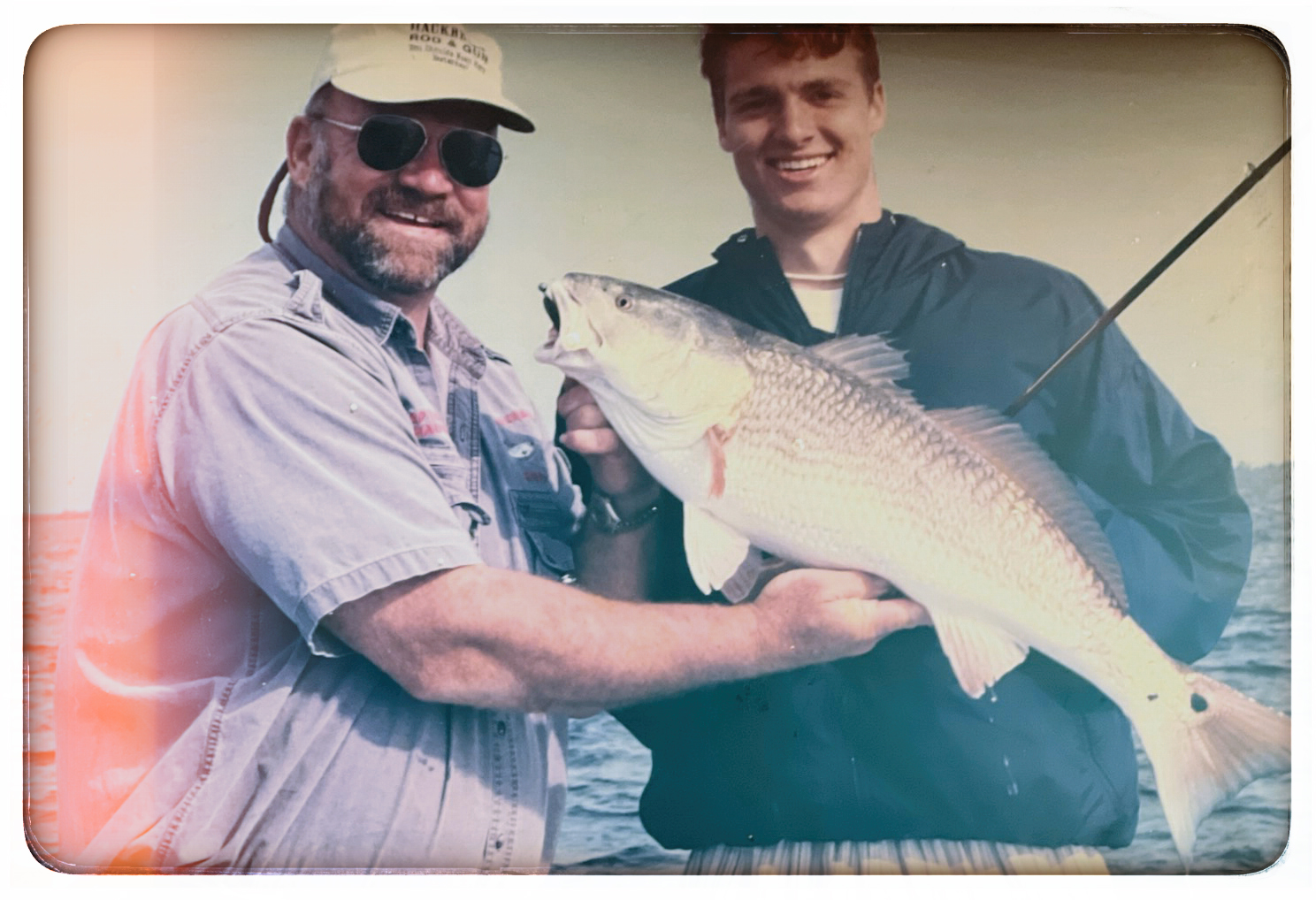
The Legacy of Terry Shaughnessy and the Fight That Saved an Estuary
By TideBandits
Tribute submitted by Bill Shearman, Lake Charles, Louisiana
For a lot of people, the Hackberry Rod and Gun Club is a destination—a place tied to big trout, big reds, and even bigger memories on the Calcasieu. But to reduce Terry Shaughnessy’s legacy to a single lodge would miss the point entirely.
Terry wasn’t just a sportsman. He was one of the first voices willing to say out loud—more than 50 years ago—that gill nets were destroying the Calcasieu estuary. And back then, that wasn’t a popular thing to say.
In those days, gill nets choked nearly every tributary outlet feeding the system. Places like Grand Bayou were effectively blocked off—netted from bank to bank. Any fish trying to move in or out was caught and killed. Big fish, small fish, gamefish, bycatch—it didn’t matter. The nets were indiscriminate, and the damage was total.
While many looked the other way, Terry didn’t. He spoke up when it wasn’t fashionable, profitable, or safe to do so. He was a voice in the wilderness long before the crowd caught on.
When the Pressure Boiled Over
In 1980, Chef Paul Prudhomme changed everything with a single dish: blackened redfish. Overnight, redfish went from a regional favorite to a national obsession. Demand exploded—and the netters responded accordingly.
For recreational fishermen, the water changed fast. A day on the Calcasieu became less about fishing and more about dodging nets and dodging boats, trying to find a stretch of water that wasn’t already picked clean or locked down. Frustration turned into anger. Anger turned into action.
By 1983, that action had a name: CCA Louisiana.
Early pioneers like George Paret, Gus Schram, and Jack Lawton, along with many others, hit the road with a simple but urgent message:
If we don’t act now, there won’t be any fish left for our children.
It wasn’t about politics. It wasn’t about sides. It was about the resource—and people finally started listening.
The Tide Turns
As more anglers found their voice, state legislators began to feel the pressure. What once seemed like isolated complaints became a groundswell of unified concern for Louisiana’s coastal fisheries.
Then, in 1995, the unthinkable happened.
A bill forbidding gill netting in Louisiana’s coastal waters moved cleanly through the legislature and landed on the desk of Governor Edwin Edwards. Against expectations—and to the shock and relief of many—Edwards signed it into law.
The results spoke for themselves.
Fish populations rebounded. The estuary began to heal. Restaurants still got their fish—this time through rods and reels, not walls of net. And the system proved what conservation-minded anglers had been saying all along: you can protect the resource and support livelihoods at the same time.
If you listen closely, old-timers will tell you that’s when you could almost hear Terry again, booming with that familiar line:
“You should have been here yesterday.”
A Legacy That Still Matters
Today, it’s easy to forget how close places like the Calcasieu came to collapse. It’s easy to enjoy healthy fisheries without remembering the fights that made them possible. But Terry Shaughnessy’s legacy reminds us why vigilance matters—and why silence is never neutral when it comes to conservation.
Hackberry Rod and Gun may carry his name forward, but Terry’s real contribution lives in every redfish that swims free through an open bayou, every angler who gets a fair shot, and every estuary given the chance to recover.
This story isn’t just history. It’s a warning—and a roadmap—for the fights still ahead.